Tuesday, 29 March 2022

UPDATE.

 A month or so after my last update and, I am pleased to say, not having been reduced to  radioactive dust, well not yet anyway,  I thought it about time I gave an update on my activities in the world of the Woodscrew Miniature Army.

Since starting construction of my fourth army I have now completed the soldiers of two infantry battalions, two field artillery battalions and a quartermaster battalion. A third infantry battalion is almost complete and shown below. All that is required is the final coat of varnish to enable these troops to join the colours.


On the vehicle and equipment side of things, I have built and painted 30 light signals trailers, 30 caissons and 36 GS wagons . I have almost completed a further batch of 30 GS wagons as shown below. These only require painting of the wheels before issuing to units.


I have also just started construction on a batch of 30 limbers. As seen below so far all I have done is cut the bodies and glued on the shafts. The next steps will be adding wheels etc.


Those readers who have followed my Imagi-Nations stories will be aware that it has been many months since I  have published any articles on this subject. You will also be aware that Archduke Piccolo wargamed a fantastic campaign based on my posts and I had decided to hold off posting any more till he had completed his excellent series of battle reports. Well of course it has been some time since that happened and I been struggling to write anything. This is because the outcome of Ion's campaign did not reflect my preconceived expectations and I have struggled to find a way of continuing the narrative in a way agreeable to me, (its my Imagi -Nation after all !!!!), and yet still incorporate Ion's superb campaign with its unexpected outcomes.

Well at last I think I have managed to draft something that does justice to Ion's excellent battles yet enables my narrative to continue along the path my imagination demands. I will review the draft over the coming days before publishing at the end of the week unless of course in the meantime Putin decides to take us all with him on the road to oblivion. 

 On which matter I see yet another Russian general has bitten the dust making seven lost so far while trying to rally the troops. Such losses must be unprecedented and makes me wonder if they should become a factor in any post 1945 European theater wargame ????


Thursday, 24 March 2022

CONSTRUCTING CAVALRY.

HOW I BUILD MY CAVALRYMEN.

 I thought it may be of interest to explain the background to how I first designed mounted troops for my armies before detailing the actual construction methods.

On the matter of cavalry, the original Miniature Warfare magazine article on which my armies are based, proposed the use of a larger size of screw for cavalry. I never liked that idea at all. I already had a horse pulling vehicles so could not reconcile myself to not using that horse in some way for cavalry too. The issue was how ???

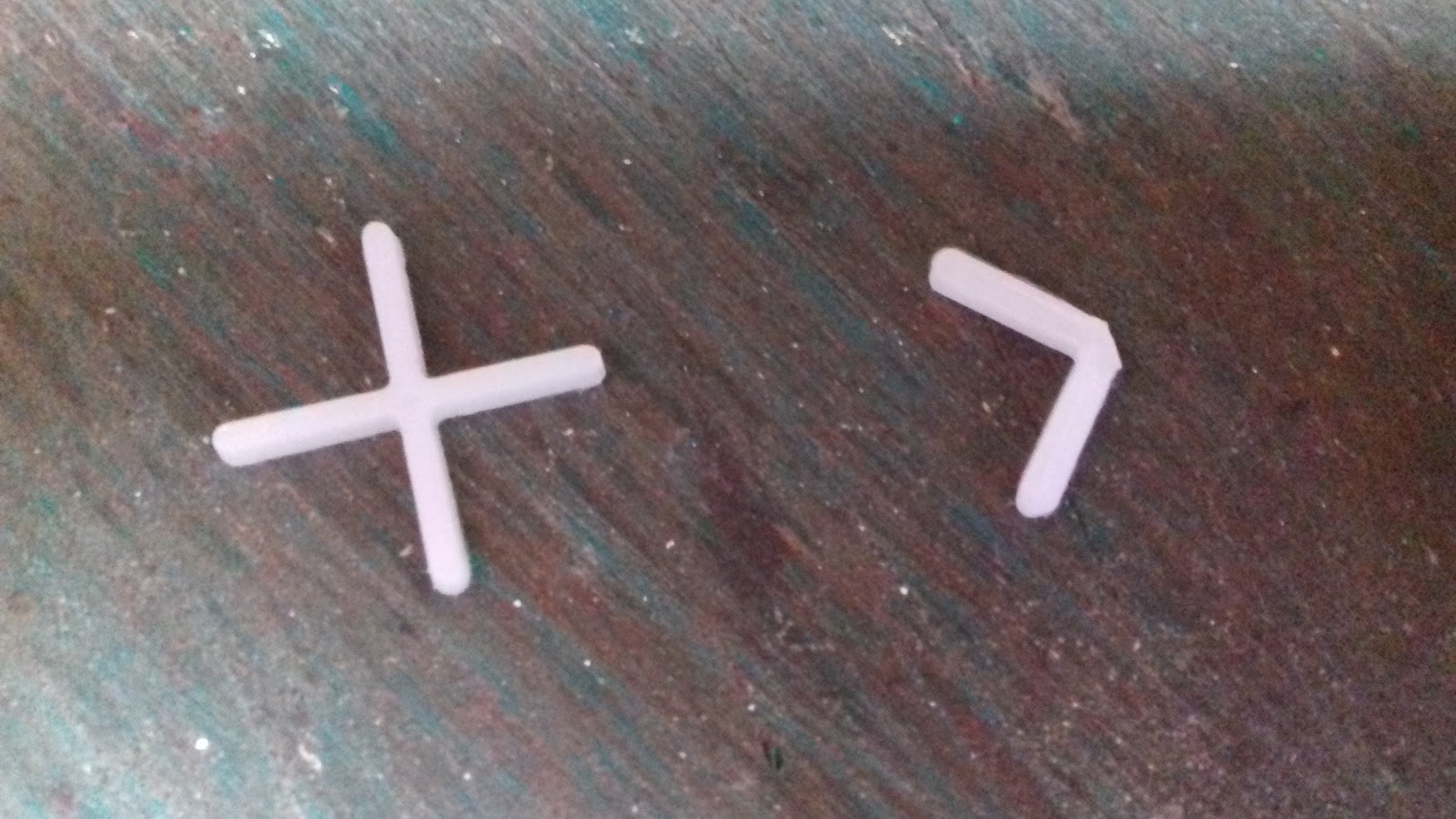
 To marry up a screw and a flat plastic card horse into a realistic cavalryman eluded me for many years. The obvious answer was to deepen the slot in the screw so it could sit on the horse but then the horse would fall over, so how to provide the stability needed ??? Than one day while doing some tiling I looked a little more closely at the tile spacers.....was this a pair of legs ???

After some experimentation I found that by cutting the spacer up I could indeed create a pair of legs, drilling a hole through a horse and fitting the legs provided a stable platform for a screw with a deepened slot to ride the horse.....hey presto a cavalryman !!!

I realize that a horse with only two legs sounds weird but  of course it is no stranger than either using a screw as a soldier  or indeed having a flat horse. The fact is it looks good and like virtually everything else in my army, it's a representation of the real thing rather than an accurate scale model. Anyway at this point in time my cavalry and horse artillery regiments have over 2100 mounted soldiers with an additional 700 on the way as I build my fourth army. 

I will now detail the actual construction method itself which I must warn is hard and time consuming. 

The starting point is a 2mm tile spacer. This is cut up to give a pair of legs.


Above is the before and after photo. Please note the flat cut at the top of the leg joint. The next step is to take  a standard horse and  drill a 2mm hole in the horse in line with the neck and about halfway down. Into this I force the legs. This is where the square cut comes in useful as it provides for accurate centring of the legs. I find that the square profile legs are a tight fit and usually require some force to get through the round hole. Be careful to cut off any flash on the legs before assembly otherwise you will not be able to force the legs through the hole.


The above photo gives two views of the assembled cavalry horse. The joint is covered with plastic modelling glue. The only time I use this smelly stuff I am pleased to say. I use  Revell glue simply because the long spout makes it easy to drip the glue into position accurately. I do find however that the glue can melt the plastic into holes sometimes so I usually drip some more glue onto the joints next day to be sure of a solid bond and good painting surface. 

The next step is the preparation of the screw soldier. Yet again this is a tedious job so I tend to cut 15 or so then do something else for a hour or two then go back and do some more until the required number are done. Basically the work involves cutting with a hacksaw into the slot on the screw head to make it deeper so it will sit on the horse. Interestingly the hacksaw cuts are the same thickness as the plastic card used for the horse. 

I long ago found that holding the screw in a vice damages the thread so now I screw the screw into a block of oak which is fixed in the vice. Using oak means I can cut at least ten screws using the same hole. You will soon know when a new hole is needed. My cavalry regiments have 109 mounted soldiers so the ten  or so holes needed use only a small area of the oak block. Every now and again I just saw the used bit off the block to enable a fresh start.


The above photo shows the cut screw. The depth of cut needs to be just less than the head and shank in total. The next job is to file both sides of the cut to remove any swarf, again tedious but essential. The penultimate task is to sit the screw on the horse. When the screw is sitting comfortably I use pliers to squeeze the cut end of the screw together as hard as possible, you will know you have got it right if the screw does not move.


The final task is to make sure the assembled cavalryman sits straight and level. Given the variations implicit in the manufacturing process it is almost inevitable that some adjustments will be necessary. It is trial and error to trim carefully either the length of one or both legs or trim a very small sliver off the bottom of the horse to achieve a good result. Don't rush this bit of work, it makes a lot of difference to the appearance and stability of the finished model. Don't get carried away either or you will end up with a Shetland Pony instead of a horse !!!

Finally, and after a great deal of work, you have a cavalryman ready for painting.....and he looks great !!!

Monday, 21 March 2022

BOOK REVIEW: FOR QUEEN AND COUNTRY.


Another book from my library which I picked up second hand some years ago. Originally published in 1981 it describes the British Army of the Victorian/Edwardian era. 

I can do no better than quote from the introduction in outlining the contents; "a profile of the army as it existed prior to the Great War, its attitudes, customs, pleasures, way of life, its character and its mannerisms, its opinions and prejudices."

This book is not a history or a campaign narrative but focuses on the day to day existence of the army as a "social institution prepared for every emergency except that of war." Apart from a fascinating content also included is a complete list of every regiment giving its original number and later post-Cardwell title in order of precedence, a very useful reference.

Unlike other such works on the British Army, this one really does illustrate life as it was for both officers and men. Subjects addressed include the regimental system, origins of officers and men, discipline, education and training, reforms, dependants and the rewards of soldering. Other interesting chapters cover the unique relationship between men and officers and the origins of the many strange customs and characteristics of some regiments.

Overall a very interesting and illuminating book that vividly illustrates the "small, odd, rather absurd British Army" and as such is highly recommended.


Wednesday, 16 March 2022

RANK AND ARM OF SERVICE INSIGNIA.

RANK INSIGNIA.

Readers may have noticed on previous photos that there are coloured stripes on the shank (between the thread and head) of some screws. These colours indicate the rank of the individual. Privates have no insignia. The rank colour combinations are based on four colours, silver, red, white and gold.

Ranks are denoted as follows:

One thin silver stripe equals corporal. 
A thick silver stripe equals sergeant. 
Two thin silver stripes equals sergeant major. 
A thick stripe of half silver and half red equals lieutenant. 
A thick red stripe equals captain. 
A thick stripe of half red and half white equals major. 
A thick white stripe equals  lieutenant colonel. 
A thick stripe of half white and half gold equals full colonel. 
A thick gold stripe equals one star brigadier general. 
Two thin gold stripes equals two star major general. 
Two thin gold stripes with a silver centre stripe equals three star lieutenant  general. 
Two thin gold stripes with a red central stripe equals four star general. 
Lastly two thin gold stripes with a white central stripe equals five star general of the army, the commander in chief.


This photo shows, from left to right, captain, lieutenant, sergeant major and sergeant. These soldiers all have a brown top which indicates they are quartermaster troops.


This photo shows from left to right, three star lieutenant general, two star major general, full colonel and major.  These soldiers have red tops which denotes they are staff troops.

ARM OF SERVICE INSIGNIA.

All soldiers, regardless of rank,  have a coloured top which denotes the arm of service as shown in the photos above. The  colours are as follows:

brown for quartermaster,
red for staff,
blue for infantry, 
black for field artillery, 
sand yellow for pioneers, 
sky blue for heavy weapons, 
purple for cavalry, 
white for medical, 
silver for signals, 
dark green for field police, 
orange for heavy artillery, 
pale green for horse artillery, 
gray for workshop engineers and finally,
gold for veterinary and farriers.


Tuesday, 8 March 2022

BOOK REVIEW: GUN FODDER.

 THE DIARY OF FOUR YEARS OF WAR.


This book from my library recalls the First World War experiences of an Oxford educated man who joined up as a private in 1914 before becoming an officer in the Royal Artillery early in 1915. The battery he was assigned to was stationed in Ireland before being shipped to Salonika where they stayed until 1917 when they went to France. By the end of the War the author was a highly regarded battery commander.

Being an educated and intelligent man with experience of the ranks he was able to relate to the needs of his men in such a way that he was clearly a well respected officer. However his early enthusiasm soon evaporated during the long posting to Salonika where he witnessed serious administrative incompetence during an obviously pointless campaign. This was then further reinforced by the bloody battles he endured in France. 

By the end of the War he was on the verge of a nervous breakdown and was thoroughly disheartened by man's inhumanity to his fellow man. Much of the final pages of the book are filled with obviously heartfelt but nonetheless idealistic discussion about the failures of politicians, generals, profit making industrialists and the overall weakness and failure of civilisation. He was clearly a very bitter man.

All that said the book does contain some very good details of life as a private, officer training, the Salonika campaign and life in a gun battery. It also demonstrates what war can do to a man's mind and in that matter alone it is well worth reading.


Wednesday, 2 March 2022

UPDATE.

 This year seems to be marching along almost as fast as the Russian invasion of Ukraine...well maybe a little faster !!!! Already it is March although judging from the endless rain and dull skies you would not think Spring is around the corner.

Over the past few weeks I have made steady progress with building my fourth army. So far I have painted up the soldiers for two infantry battalions and one field artillery battalion. I also have almost completed the soldiers of a quartermaster battalion. On the equipment side I have built and painted 30 ammunition caissons, 30 light signals trailers and 36 GS wagons. Another batch of 30 GS wagons are in the final stage of construction.


The above shows the light signals trailers built and primed. These equipments are issued to all combat battalions.


Seen here are the same trailers all finished and awaiting issue. 


This photo shows the ammunition caissons built and awaiting priming of the wheels and towing hooks. I am sorry I forgot to take a photo of the completed units before issue to battalions.

I expect many wargamers of the modern period are watching the TV news of Ukraine with great interest. Apart from the unpleasant possibility of nuclear war and the dreadful suffering of the Ukrainian people, the TV films of Russian military vehicles are fascinating. That the Russians are having serious difficulties in supplying their forces is beyond doubt. Given they had plenty of time to prepare, clearly logistics was badly overlooked. I have also seen a number of images of broken down Russian vehicles too. Although Russian equipment and weapons are formidable, all those issues together with the apparently poor quality of their conscript troops makes me wonder if the Russian "steamroller" may not be as powerful as we had assumed. Certainly the film of 30 plus miles of vehicles stationary on a road must seem a "dream"  target to NATO airmen. 

Remaining positive and assuming we have not become radioactive dust by then, I will provide another update in a few weeks time.


Friday, 25 February 2022

FLAGS.

My army has three types of operational flag. 

The national flag is carried by all battalions and regiments and is oblong, solid blue in colour with a single white star in the first hoist area of the flag. 

Each battalion/regiment also carries a battalion/regimental  flag which is triangular, with a blue field and  the battalion/regiment number in white on the field. The staff is coloured to the arm of service for that particular type of battalion/regiment. In the case of brigade command battalions the main part of the staff is coloured red for command but the top of the staff is coloured to the type of brigade, infantry or cavalry. 

 The third flag is the general's personal flag. These are also triangular with a blue field but the staff is gold and there are small stars across the field, either one, two. three, four or five to represent the general's rank.


This photo shows from right to left, a three star lieutenant general's flag, a two star major general's flag, the battalion flag of 7th army command battalion and lastly the national flag.

The only other flag is the red cross flag which is flown by all ambulance wagons. Other medical vehicles carry a small red cross sign on each side only.

My historic reference for many of the design ideas of my flags is  based to some degree or other on the US army of the Civil war period.


Sunday, 20 February 2022

BOOK REVIEW: 'TWEEN DECKS IN THE 'SEVENTIES.

Reminiscences of a sailor of the Royal Navy during the Victorian Era.


 This is another book from my library. It was written in the 1920's as far as I can tell and recounts the service life of a Scottish millworker who joined the Royal Navy in 1875 at the age of sixteen.

The author spent the first two years of his service on training ships at Portsmouth including HMS Victory where he learned all the skills required of a sailor. At this time most warships retained sails as their main source of propulsion. Although the majority were also fitted with steam engines these were very much auxiliary sources of power. 

Following this extended period of training the author was posted to HMS Swallow, an 800 ton gunboat. On this ship he then spent the next four years on a continuous patrol firstly on the west coast of Africa then on the east coast of South America. At the time four year patrols were the norm. It is hard to imagine spending such a lengthy period away from home with just occasional layups  for repairs and resupply in ports along the patrol line which usually provided a few days break on shore.

The author never experienced any combat action during the whole of his service. Therefore the book is filled with accounts of his day to day life firstly on the training ships then on the gunboat. These adventures are interesting and valuable accounts of life in the Royal Navy in this era. There can be no doubt he thoroughly enjoyed his naval career and it seems he only left the navy due to some injury suffered after returning to Portsmouth following the four year cruise. Unfortunately the details are unclear about this matter, I think the intention may have been to write a second book but my research indicates this never happened.

Overall a fascinating story of life in the Victorian Royal Navy and highly recommended to anyone interested in the Senior Service of this era.

Sunday, 13 February 2022

MODELLING PAINT.

PAINT.

I have always used Humbrol enamel modelling paints. I admit they are not quite as good as years ago but still I find them best for me. During the over fifteen years from the mid 80's to early 00's when my army resided in the loft, all my paints were also packed away. When recovered and set up in my , then new, modelling unit, I found that of 19 tins of paint only one had dried up. The others were perfectly usable.  Strangely however all the hairs on every single paint brush had fallen out leaving me with a pile of sticks and a birds nest of hairs !!!

 Today my main complaint is that some of the colours display odd characteristics. For example the gloss red number 19, tends to change into a jelly like consistency long before even half used. I have not found any way to stop this process despite remixing with both thinners and even acetone. I complained once to Humbrol who responded that the barcode on the tin could not be identified !!!!  Others like the matt black number 33, when newly opened,  tend to dry to a glossy finish.  I think it is the thinners they use. Despite trying endless mixing the only cure I have found is to leave new tins open, without mixing, for several hours to allow this agent to evaporate. That does tend to solve the problem and also makes the paint a little thicker and thus give better coverage too.

When painting screws I do not use any primer. I have found that the normal base colour together with the top satin varnish coat, number 135,  is fully serviceable. Indeed although virtually all screws have at least a slight rust covering to start with, that seems to aid paint coverage. To date I have never found any rust on my painted soldiers. I do use primer, number 01, on wheels (drawing pins) flags ( paper and pins) any exposed glue and all plastic components on vehicles and equipments. The top coat then covers so much better.

The only mixing I do is for the base colour of my soldiers (screws). The original colour used was HU17 in the Authentic colour range. Since that range has become unavailable the online colour comparison charts indicate 116 is the current equivalent. However I find it to be rather lighter so I add about 20% matt black to each new tin to get the shade I need. I usually make up two or three tins at a time as it is a messy job !!!


Wednesday, 9 February 2022

BOOK REVIEW: THE CARRIAGE TRADE.

 MAKING HORSE DRAWN VEHICLES IN AMERICA.


Regular readers will be aware that I have a great fascination for horse drawn logistics. Naturally this extends to the actual wagons and this book, from my library, gives a fascinating account of the wagon trade in America in the 19th century.

The book describes how the making of horse drawn vehicles moved from being the product of highly skilled workmen in small local shops to mass production in factories using ready made parts supplied by specialist manufacturers. Although never made on production lines like automobiles, wagon construction certainly paved the way for the production line manufacturing concept. 

Strangely however, only one major wagon maker actually made the transition to automobile construction. This was the famous Studebaker company, the biggest wagon manufacturer ever. With this one exception, all the other wagon builders faded into oblivion during the early years of the 20th century leaving only small local workshops to carry out repairs and build the occasional new wagon, just like the business had been 100 years before.

The book also discusses the actual wagon, and carriage, building process, the decline of traditional craft skills and how American manufacturing generally changed over the century. This is fascinating in its own right if you have any interest in the rise of the production line and mass production, both of which of course originated in America.

Overall a great book on an interesting, well to me anyway, subject.

Friday, 4 February 2022

UPDATE.

 Although it has been almost a month since I gave an update on my activities, it seems only a few days ago to me. Certainly one disadvantage of advancing age is that the days and weeks seem to fly by and I struggle to recall what I have been up to yet I feel I have been so busy !!!!

On the modeling front I have completed the soldiers of a field artillery battalion, the first of 12 for the new army.


In addition I have finished building the first batch of GS wagons. So that is 36 done of a total needed of 390   !!!!!


Finally I am also well advanced with the second of the 24 infantry battalions needed. I still have some rank and arm of service details to add and then they all need two coats of varnish.


So I feel I have been quite productive over the past few weeks especially as I have also been engaged in the process of buying a new car. Always a fun thing to do but a shame I am having to wait till the beginning of May for delivery because of the microchip shortage. However, given what I said at the start of this update, by the time I get there it will no doubt seem I have been waiting only a couple of weeks at most. !!!!!!


Sunday, 30 January 2022

BOOK REVIEW: STUG 111 BRIGADE 191

THE BUFFALO BRIGADE.

In action in the Balkans, Greece and from Moscow to Kursk and Sevastopol.


This is a new purchase from The Works and relates the history of the "Buffalo Brigade" of Stug 111 assault guns from formation in 1940 until the end of the war. It is written,  like similar books, by an NCO of the Brigade with contributions from other veterans.

I have always been an admirer of the Stug 111 assault gun, I have liked the lines of the vehicle ever since building the Airfix kit many moons ago. The book gives an excellent battle history  and describes, as usual in such unit histories, the desperate fighting on the Eastern front. This unit never fought in the West.

However the best thing about this book are the huge number of never before published photos which really tell the story of  day to day life in the brigade and include terrific details of the unit's equipment and supporting vehicles. It is a treasure trove of information for those interested in German armour in WW2.

An interesting fact that I have found in similar books again comes across clearly which is that this unit never seemed to suffer from supply shortages until the very last few days of the war. Somehow or other the supply of fuel and ammunition and even replacement vehicles was maintained till the end. 

Highly recommended for fans of German armour and assault guns in particular.


Tuesday, 25 January 2022

ORGANISATION OF THE ARMY.

BASIC PRINCIPLES OF BATTALION ORGANISATION.

There are a number of basic principles that apply to the organisation of all types of battalion in my army as follows:

1. Battalions having all soldiers horsed such as Cavalry and Horse Artillery are called regiments rather than battalions but the basic structures are identical.

2. Each battalion is autonomous and capable of independent operations and has vehicles and equipment accordingly.

3. Each battalion consists of operational companies and a headquarters company which includes platoons of all the necessary supporting services.

4. Battalions are commanded by a Lieutenant Colonel supported by a Battalion Sergeant Major with a Major as adjutant and second in command. The Major also commands the headquarters company.

5. The Lieutenant Colonel, Sergeant Major and Major are all members of the arm of service applicable to the battalion. The only exception is for Medical battalions where  command is exercised by Staff officers.

6. Captains command companies/batteries with a Company Sergeant Major as assistant. Lieutenants command platoons. Sergeants are usually posted on the basis of one for every 12 or so privates. Corporals are posted on the basis of one for every six privates. The only exceptions are in specialist units like Medical, Workshop and Veterinary companies where the ratio of NCOs is usually higher.

7. Medical personnel are allocated on the basis of potential for casualties. Therefore non combat battalions have a smaller complement with a single doctor whereas Infantry battalions have two doctors and sufficient medics to staff both a battalion aid post and give each combat company a dedicated medic.

8. Quartermaster personnel are allocated on the basis of two privates for each wagon, limber or heavy trailer. Quartermaster personnel are responsible for vehicles, driving and welfare of horses, all classes of Battalion supplies with the NCOs doing the cooking on the field kitchen.

9. Staff troops are provided to give  expert resource for battalion administration and are allocated on the basis of the potential amount of administrative work in each particular battalion type. For example Quartermaster and Medical battalions have significantly more Staff troops than Infantry or Artillery battalions.

10. Signals personnel are provided on the basis of potential communications needs. Non combat support battalions therefore tend to have a higher complement than combat units.

11. All battalions have field kitchens and water trailers and, other than Medical battalions, a medical supply trailer. Combat battalions also have light signals trailers.  Non combat support battalions have signals wagons and/or heavy trailers reflecting the heavier communications demand.

12. All battalions have two standard bearers carrying a national flag and the unique battalion flag under the command of the battalion Sergeant Major who also commands the Staff platoon in  combat battalions.


Tuesday, 18 January 2022

BOOK REVIEW: OF LIVING VALOUR.

 The Story Of The Soldiers Of Waterloo.


This is a book from my library. Basically the book relates the battle of Waterloo with extracts from soldiers letters, diaries and journals used to illustrate each element of the fighting from the soldiers perspective.

Those  familiar with Mercer's Journal will see a number of passages from his book among others. However the bulk of the references are made from unpublished letters or diaries. As the writer explains, by the time of Waterloo there were a significantly larger number of literate common soldiers than only 20 years earlier. As a result there are vast numbers of soldiers letters from this period as yet unpublished but often quoted from here for the first time.

The resulting book gives a fresh view of the battle and certainly conveys what it was like to actually participate. Some of the descriptions are certainly not for the faint hearted but of course "tell it like it was".

A good read and recommended if you want a "down in the mud" description of this historic battle.


Thursday, 13 January 2022

UPDATE.

 A belated Happy New Year to all. 

The past couple of weeks seem to have been busy with domestic things so I have not enjoyed a great deal of modelling time. However the first battalion of infantry for my new fourth army has been completed.

No vehicles or equipment yet, these will follow over time, just 407 soldiers. I also managed to complete a small batch of GS wagons and light GS trailers for existing Heavy Artillery battalions as an upgrade and these have been issued. I am now working on a larger batch of 36 GS wagons for general issue to the new army.

These can be seen on the workstation above. The bodies have been made and the next step will be fitting the shafts which can be seen on the right next to the tube of glue. After that, wheels, towing hooks and horse mounting blocks will be fitted. Also to be seen are my production lists. The pink sheets list vehicles and equipment to be made and the white sheets detail the "soldier" needs for each type of battalion.

The above photo is the first I have taken with my new smartphone which is supposed to have a superior camera to my wife's phone which I have used till now. My old phone was "clockwork" being at least 15 years old and camera-less !!!! I finally decided to upgrade. However my stubby old fingers are finding it harder to accurately tap the keyboard screen rather than the buttons on the old phone. The new phone seems to do everything imaginable including the washing up but I expect it will take me years to fully understand the thing....progress ????

Regular readers will be aware that Archduke Piccolo is coming close to the final battle of his wargame campaign based on my Imagi-Nations. If you have not read his blog posts you are missing out seriously. I  commend his blog to everyone. 

Friday, 7 January 2022

BOOK REVIEW. THE LINE OF COMMUNICATION.


 This book is from my library and is a reproduction of a volume originally published in 1883 by George Armand Furse, an officer of the Black Watch who was a prolific author of books on logistics.

Furse was, for his time, unusual in that he believed officers should be studying the science of war. This view was enhanced by the , at the time, recent Franco-Prussian War of 1870-71. The "new" Prussian army had totally outclassed the French and many "thinking" officers looked to learn the lessons of why the Prussians had been so successful. The organisation of the Prussian supply services was seen at the time as a great leap forward and worthy of application to other armies.

Furse well understood that Britain's wars at the time were overseas, generally against primitive locals and conducted on a much smaller scale than European wars. However he clearly believed there were still lessons to be learned. The book discusses the Prussian model of logistics but set in a British scenario whereby the "base" would be provided by the Royal Navy. The composition of the base, lines of communications and the supply services are covered in great detail and even the question of procurement of local foodstuffs and horses is discussed in depth.

Overall an excellent book if you are interested in the state of the art thinking about logistics in the British army of 1883.


Sunday, 2 January 2022

ORGANISATION OF THE ARMY.

The basic tactical unit of my armies is the battalion. Each battalion is a self supporting unit capable of independent operations and includes such functions as medical, administrative, quartermaster, and signals troops and equipment. There are a number of different battalion types including, Infantry, Field Artillery, Heavy Artillery, Pioneer, Quartermaster, Medical, Field Police, Heavy Weapons, Quartermaster Transport and Command together with Cavalry and Horse Artillery regiments.

The basic structure of a battalion comprises a number of operational companies under the control of a headquarters company. Each company is composed of a number of platoons. As examples, an Infantry battalion has 6 combat companies each with three platoons, a Heavy Weapons company of two platoons and a headquarters company which includes medical, signals , quartermaster and staff platoons. A Quartermaster battalion has two transport companies, each with two platoons, a veterinary company and a workshop company, each with  three platoons and a command company again comprising medical, signals, staff and battalion quartermaster platoons. Battalions vary in size from 131 soldiers for a Horse Artillery regiment to 407 soldiers for an Infantry battalion.

These battalions are organised into what I call brigades but which are the equal of divisions in other armies. I currently have three brigade types, Infantry, Cavalry and Army Command.

An Infantry brigade comprises a Command battalion, 6 Infantry battalions, 3 Field Artillery battalions, one battalion each of Pioneers, Medical and Quartermaster. A Cavalry brigade comprises 6 Cavalry regiments, two Horse Artillery regiments,  Quartermaster and Command battalions . An Army Command brigade, under the direct control of the Army Command battalion, consists of a Field Police battalion, a Heavy Weapons battalion, four Heavy Artillery battalions, a Quartermaster battalion and a Quartermaster Transport battalion. These battalions are used to support the army generally or operations by specific brigades as needed. The exact composition of any brigade can be varied to suit particular mission requirements just by plugging in or out battalions.

Brigades are grouped into armies. Each army has an Army Command battalion, Army Command brigade, four Infantry brigades and a Cavalry brigade with a total of 72 battalions.

I have four display units and each houses one army. Three armies are complete and the fourth is now in course of construction. The strength of each army is a little over 20,000 which with the addition of  Army Group troops gives a total Army Group target strength of just over 82,000.

My references for the organisation of my armies  include the US army of both the Civil war and Vietnam eras both of which were generally battalion based and grouped into brigades. I have also been influenced to some degree by the organisation of the original BEF of 1914.


Tuesday, 28 December 2021

BOOK REVIEW: THE SPLINTERED EMPIRES.

The Eastern Front 1917-1921


 This is the last of the four book set I bought recently on the Eastern Front during WW1. 

Just like the other books this is a deeply researched and very well written account of the final years of the war in the East , the Russian revolution and the "Pygmy Wars" that broke out after the Armistice as newly independent nations sought their place in the sun.

Following the fall of the Tsar in early 1917, the Provisional Government of Russia tried very hard to continue the war against the Central Powers but as the communist revolution swept through Russia, the army and navy basically collapsed into anarchy. Soldiers Committees sprang up to challenge the authority of officers and discipline in the military fell apart with thousands of soldiers deserting and going home. The Germans offered peace and to backup that offer launched an offensive. With virtually no opposition they advanced throughout the Baltic nations and into Ukraine. Finally, the Bolsheviks, now fully in power and more interested in the revolution than maintaining the fight against Germany, agreed punitive peace terms bringing the war in the East to a conclusion.

With the troops released, but not all as many had to be retained in the East in case the peace faltered, the Germans launched their attack in the West, the result of which is well known. With the subsequent collapse of the Central Powers and the end of the War, the various new nations in the Baltic together with a newly independent Poland all sought to strengthen their positions against Russia and each other in a whole raft of so called "Pygmy Wars". These wars are fascinating in both their variety and scale. The new nations could only field tiny armies and even German troops took part. These various wars offer a huge opportunity for wargaming and this book is worth reading just to understand those scenarios.

Overall a fascinating and very readable book which tells how eastern Europe was reshaped in the aftermath of the First World War.  Together with the previous volumes this is a highly recommended set of books on a fascinating and complex campaign.

Thursday, 23 December 2021

UPDATE.

 Merry Christmas Eve Eve to all.

Just a line to thank all my readers for taking the time to read my blog this past year and I hope to retain your support in 2022. I hope you all have a great Christmas and get the model soldiers, books and other modelling or wargaming things you want from Santa. If you only get shower gel or aftershave, you did not drop enough hints and if you only get socks, you must be on the naughty list !!!!!!

The highlight of my blogging year has to be how  Ion at Archduke Piccolo blog  has taken my Imagi-Nations posts and created an amazing wargame campaign with a raft of superb battle reports. I am proud to have had even a small part in such a well received event.  I wonder if there is another campaign to be had in 2022 !!!!!

I hope 2022 is a prosperous, safe and happy year for you all.

Sunday, 19 December 2021

UPDATE.

Despite the demands caused by the rapid approach of Christmas I have managed a good amount of modelling time these past couple of weeks. In fact I have completed all the upgrades I have been working on for the last couple of years. My three armies are now complete with each having a strength of 20,020 which together with an Army Group Command battalion gives me 60,302 soldiers with the colours.

I have now started construction of my new fourth army.


This photo shows the screws counted out for the first of the 24 new infantry battalions for that army. These battalions are 407 strong including the two flag bearers which can be seen to the left above. Uniform painting will commence shortly. I have also made a start on vehicle construction.


This photo shows a batch of 16 GS wagons and 18 light GS trailers. The vehicle bodies have been made and shafts fitted. The next steps will be fitting wheels and horse mounting blocks to the wagons before moving onto painting.

Regular readers will be aware that Ion of the Archduke Piccolo blog has been fighting a wargames campaign based on my Imagi-Nations articles. The campaign is now reaching its climax and I encourage all to read Ion's exciting battle reports. The latest is due for publication any moment now and will undoubtedly be well worth a look. Once the campaign is complete I will publish the next installment of Imagi-Nations which will give an overview of this campaign and the "historical" implications.