Sunday, 22 August 2021

UPDATE.

 August in the UK this year has clearly been the first month of Autumn with some weeks of rain, cloud and low temperatures. The good side of this is that I have managed to get a bit more modelling time. Since my last update I have completed  upgrades 27 through 32 which have added 714 more soldiers to the ranks. 

On the woodworking project I am still waiting for the quarter inch thick white melamine faced MDF sheets that I use for the back of the display unit and the actual shelves. In common with many building and timber products these sheets are in short supply at the moment and have  more or less doubled in price too. I am told delivery should be next week so will keep my fingers crossed. As soon as work starts on construction of the new unit I will post accordingly.

Regular readers will have noticed a new Imagi-Nations post this past week. As I mentioned previously the timeline is now within a couple of years of the present day so I decided to spread out the remaining chapters and publish just once a month. I hope you all still find them interesting.

I have been surprised that no one commented on the video I included in my last update on the battle of Isandlwana. Maybe everyone has already seen the film and I was late to the party. However if you have not watched it, I urge you to do so, it really is very good.


Wednesday, 18 August 2021

IMAGI-NATIONS. PART 43.

 THE BATTLES WITH RUSSIA.


While fighting raged in the west against Germany in late 1888 and early 1889 the two sides in Ukraine remained facing each other with neither side having the strength to force a decision. The Russians had committed virtually their whole army to the struggle but still could not risk an assault against the over whelming UNION artillery. The UNION had only four armies in Ukraine and until reinforcements became available after the defeat of Germany they too did not wish to risk an attack. Both sides contented themselves with digging in and exchanging regular artillery barrages although the Russians had soon learned that UNION counter battery fire was highly effective meaning Russian batteries had to move positions regularly.

When the Germans had initially invaded  in the west, the UNION was very concerned that the Russians would launch an attack to support their allies knowing that UNION forces would be weakened in Ukraine as a result of fighting on two fronts. They had therefore adopted a strategy of launching cavalry raids from the south of Ukraine against the 1000 mile long Russian supply lines in the north. The four cavalry brigades available were formed into an ad hoc  cavalry army under the command of General Forrest and he established a base just north of Kiev. The government of Ukraine supported the UNION cavalry by supplying food and fodder to the base meaning that UNION transport companies only had to deliver ammunition and other military supplies. In addition the UNION finally decided to construct a railway line from Richmond to Kiev, something the Ukrainians had been requesting for years but which the UNION had refused because of the conditions agreed with Russia in the peace treaty after the War of Independence which precluded either side from constructing any railways in Ukraine.

The cavalry under Forrest launched their first raid  against Russian supply lines and their railway on 7 December 1888. It was a great success and resulted in destruction of several Russian trains and substantial damage to the tracks in many  places as well as destruction of large amounts of supplies. Over the next few months the raids continued as the Russians desperately sought to defend their supply lines. A large number of Russian reserves as well as troops from the front line formations were deployed to protect the railway reaching over 50,000 men by January 1889. Blockhouses were constructed at intervals along the railway but UNION cavalry seemed able to slip between the Russian positions almost at will. By late February severe shortages of ammunition and other supplies were being felt throughout the Russian front line formations.

The Russians realised that their situation was becoming desperate and with news of the collapse of the German army it was only a matter of time before huge UNION reinforcements would arrive to launch an over whelming attack on the weakened Russian army. Clearly the Russian gamble had now failed and it was time for the Russians to retreat out of Ukraine and seek to defend the border where at least they would be free of the very damaging UNION cavalry attacks. Preparations immediately began to start a phased withdrawal using strong rearguards to prevent the UNION turning the retreat into a rout.

At the end of March 1889 the Russians began their retreat. The UNION had no idea at first the Russians were falling back as strong Russian rearguards gave the impression the Russian forces were still in position. A UNION cavalry attack on the Russian railway  on 2nd April gave the first serious indication of the Russian retreat. As UNION cavalry ambushed a Russian train moving east the cavalry were surprised to receive very fierce return fire from the train. As it came to a halt, over 2,000 Russian troops deployed from the train and assaulted the dismounted cavalry. Almost immediately another train arrived and also disgorged a large number of troops who joined the attack on the UNION cavalry. Vastly outnumbered and suffering heavy casualties, the UNION cavalry had to make a quick retreat.

The same thing happened two days later as the UNION command realised that railway traffic on the Russian tracks was now predominately east bound. A Russian retreat was clearly in progress. UNION forces were instructed to follow up the Russian withdrawal but, to avoid unnecessary casualties , to maintain a distance unless Russian troops showed an inclination to hold their ground for more than a day or two. The UNION cavalry were ordered to cease attacks on the Russian railways, except for horse artillery fire on passing trains, and just monitor the Russian withdrawal.

By early June 1889 the Russians had withdrawn to the Volga river and could be seen by UNION cavalry patrols to be entrenching on the eastern bank on Russian soil. The UNION army advance guard arrived on the west bank on 15th June and deployed opposite the main bridge. UNION heavy artillery was ordered to destroy the bridge with a bombardment  at dawn on 17th but during the evening of 16th June the bridge exploded and collapsed from the effects of Russian demolition charges. During the following days a number of Russian stragglers were captured along the line of the railway as they made their way east. All were escorted to the Volga and, after a short delay, a boat came over from the Russian side and was allowed to remove the last Russian troops from Ukraine. Further south, the other two light bridges over the Volga were destroyed by Russian demolition charges as soon as UNION forces came in sight.

As the UNION celebrated its victory over the combined forces of Germany and Russia, time was also taken to remember the many thousands of UNION soldiers who had been lost in the heavy fighting on both fronts. The war had cost more UNION lives than any other war and the UNION was very aware that defeat had come very close. The exhausted UNION armies remained in their front line positions while preparations were made for them to return to their bases and arrangements were made for small garrisons to monitor both the Volga and the Rhine. Without warning on 28th June a message was flashed to all UNION commands that cavalry from 10th Reserve army patrolling in southern China had located a very large Chinese army moving south towards the border.


Friday, 13 August 2021

BOOK REVIEW: FROM THE GRACCHI TO NERO.

A History Of Rome From 133 BC To AD 68.


Following my review a while ago of my old school book about Republican Rome, Ion of the Archduke Piccolo blog told me about this book, by the same author, which is the follow up volume. Of course I just had to buy a copy and secured this used "as new" paperback. Thanks Ion for bringing this book to my attention.

I have now read the book and it is excellent. I really like the writing style and it complements the previous volume perfectly. The transformation of Republican Rome to Imperial Rome is clearly described. It is strange that, at the time, the Emperor was not so, just First Citizen. Romans had a great historical aversion to the idea of a Monarchy so the move towards an Emperor was carefully disguised using the old Republican terms of Consul etc. It is also clear that most Romans had no desire to repeat the misery of the Civil Wars  so were happy to accept the peace and prosperity bought by an all powerful "First Citizen" who curbed the ability of individual Senators to enrich and empower themselves at the expense of the nation.

I have looked for the logical next volume covering the Emperors after Nero but can find nothing written by Scullard which is a great shame. However as I am more interested in the early history of Rome I will not worry too much about finding an alternative author.

On a general note, in reading about Rome, it never ceases to amaze me just how sophisticated Roman society actually was some 2000 years ago. I often wonder, if Roman civilization had not given way to the Dark Ages but had continued to advance without interruption, just where would we be today. It is at least arguable that a good 500 years of development were lost to Mankind. On that basis the civilization of today could have existed in 1521. Now that is a thought !!!!


Sunday, 8 August 2021

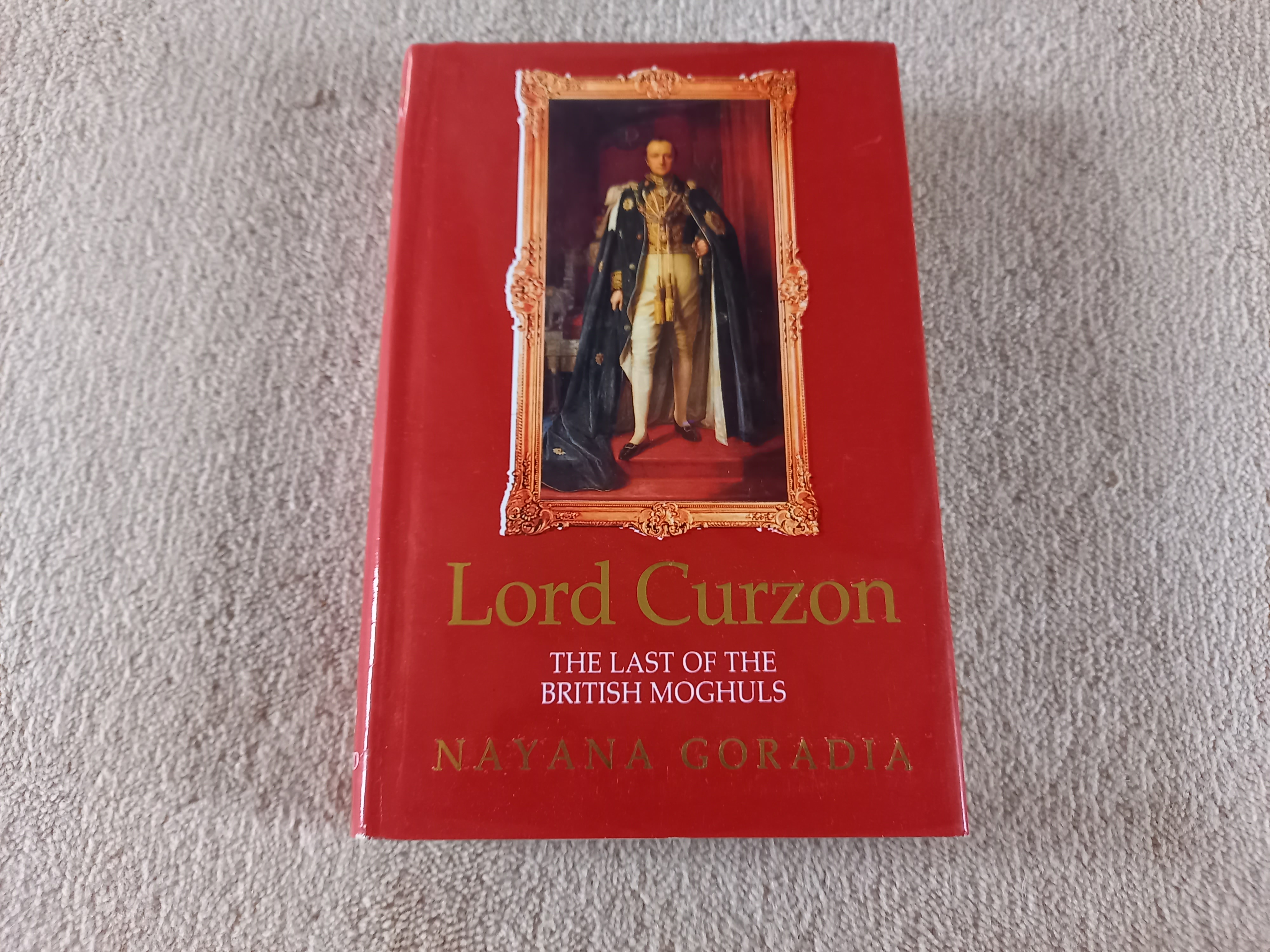
BOOK REVIEW: LORD CURZON

The Last Of The British Moghuls.


This is the second book I recently purchased at our local National Trust second hand bookshop.

The author is clearly a strong supporter of Indian nationalism. As a result the first half of the book covers Curzon's early life and the other half is devoted to his time as Viceroy. His political career before and after his 7 years as Viceroy is virtually ignored. The main aim of the book seems to be to suggest that the effects of his upbringing and schooling especially his time in the English public school system created some sort of deviant human being which manifested itself in his time as Viceroy.

The book also devotes a lot of space to describing the advent of some very marginal Indian resistance movements while almost ignoring Curzon's well known struggle with Kitchener for control of the Indian army. In fact one could be forgiven for assuming after reading this book that Indian independence took place because of Curzon's performance as Viceroy and indeed only a couple of years later rather than over 40 years later.

I am sure that this book's version of history will appeal to some but I am not one of them. I have no doubt that Curzon,  like all people,  had flaws, but some of the suggestions alluded to in this book are really ridiculous. This is not a real autobiography of a significant politician of the late 19th and early 20th century but rather a politically motivated hatchet job designed to strengthen the view that the British Raj in India was operated by sociopaths and was therefore very bad with no redeeming features at all. 

Like many people I take the view that the Raj had both good and bad elements. However at the time it seemed like a good idea and I just do not believe that it is reasonable to apply today's perspectives to those of the past. It is certainly not fair to paint such a distinguished statesman as some sort of monster just to support a radical political theory.

As I do not believe in destroying any book under any circumstances this book will be donated to a charity shop  as quickly as possible.

Thursday, 5 August 2021

WOODWORKING PROJECT. PART 2.

Having allowed the glue on the new bookcase to dry over the course of a couple of days the next task was to cut off the surplus dowel rods used to fill the "pocket screw holes" and sand the dowels flat. In the photo below you can just see the dowel used to fill the screw hole attaching the bun feet sanded down.


The next picture shows the top with rounded over corners and edges.


The next step in the finishing process was application of two coats of Antique Pine stain. Although all our furniture downstairs is oak, upstairs the colour of choice is antiqued pine. The photo below shows the unit after those two coats. Also shown below , because I forgot to photograph it before staining, is the dowel rod in a "pocket screw hole" cut down and sanded flat. As can be seen the effect is of a lozenge shape. This looks quite attractive and eventually after finishing is complete it almost disappears.


This photo shows the whole unit fully stained.


After staining the unit received two coats of lacquer with a very light sanding between coats. The next photo shows the unit in its new permanent home after the lacquer dried overnight.


The final touch is a light waxing. Although the unit looks wider at the top than the bottom it is in fact quite square. The strange shape is caused by the funny angle I used to take this photo.


Just for interest, the dimensions of the unit, including overhangs and bun feet are: length 39" 990mm, width 18.5" 475mm and height 36.75" 935mm. The total shelf space is 216" (18 feet ) 5490mm (5.5m ).

I am currently awaiting delivery of the timber for the new modelling unit itself and will post on the construction of that unit just as soon as work gets underway.

Saturday, 31 July 2021

UPDATE.

 I am pleased to report that I have managed a reasonable amount of modelling time over the past few weeks. This is surprising given the time I have spent on building my new bookcase,  (the second part of the construction report will be published in a few days, )  and other chores and social activities. I really have no idea why some weeks are more productive than others.

I have managed to complete update numbers 25 and 26 which have brought my armies to a strength of 56,622. In addition I have added yet another upgrade to the list. Upgrade number 49 covers the increasing of heavy artillery gun crews from 6 to 8.  I decided that heavy guns needed more crew than field artillery and my references agreed with that view.

I must also report that the number of visitors to my blog has now gone over 10,000 and I have a new follower bringing the total to 7.  I know that's not much compared with many of the wargaming/modelling blogs out there but given that mine is about using woodscrews to make model soldiers I am very pleased indeed and grateful to all those who read my stuff.

Finally I must bring readers attention to an amazing YouTube video I recently watched. Some of you may well have seen it already but I strongly recommend it. The video is about the Battle Of Isandlwana but is filmed using plastic model soldiers.  It took the best part of two years to make apparently and I think is really brilliant.


I especially commend this film to Mark at Man of Tin blog, I think it is right up your street Mark. Hope you all enjoy as, not being a child of the digital age, it took me a long time to create this link !!!!!


Tuesday, 27 July 2021

WOODWORKING PROJECT: PART 1.

I mentioned sometime ago that having almost completed my three armies, I now wanted to build a new display unit to take a fourth army , the construction of which would keep my hobby going for another 5 to 6 years at the least. The problem was , where to locate the new display unit having already exhausted the available wall space in both our spare rooms. Strangely my wife was not keen on having the new unit in either our bedroom, the dining room or even the lounge. 

After much consideration I concluded that the only practical place would be underneath my third display unit which currently sits on a bookcase. My idea was the remove the bookcase and use the space thus available. However, having so many books we could not afford to lose 15 feet of bookshelf. I therefore decided to build a free standing double sided bookcase which could sit in the middle of the room alongside the stereo tower.

The current arrangement is shown below.


The project involves three stages. First I need to build the new bookcase. Second I will build the new display unit and thirdly I will  carefully remove the old bookcase while supporting the existing display unit, fit the new unit underneath and securely attach both together and to the wall.

To build the new bookcase I am using manufactured pine boards that come in 8 by 2 foot panels. These are made up of small strips of timber glued together and planned smooth. Although expensive they save a lot of time in making and finishing my own panels. When building with hardwood I always make my own panels using "biscuit" joints. My first job was to cut all the component parts; a top and bottom, two side panels, two shelves complete with supporting rails and  top and bottom rails. I already had a set of bun feet in stock left over from a previous project. The photo below shows the various parts cut to size including the bun feet  just visible in the top left.


The next step was to attach the rails to the two central shelves. These rails are fixed to the top of the shelves. They serve three purposes. As the bookcase is double sided, they will stop books being pushed back onto the other shelf. They also provide some addition strength to the shelves and lastly, as the bookcase has no back as such, it needs some sideways bracing. The four rails altogether provide this bracing.


The photo below shows the top and bottom panels ready to have the corners and edges rounded over which I do with the router. After that all the pieces were sanded then wiped with a wet sponge and left to dry. This raises the grain so that after another sanding the wood is smooth enough not to require any addition sanding other than a light wipe over with "wet and dry" during final finishing.


The whole structure is assembled using "pocket screw joints" and glue. I find this method gives the strongest joints for units made of panels. I have a jig to make the pockets and use special screws to make the connections. The photo below shows the unit fully assembled with the bun feet also attached.


In order to hide the "pocket screw" holes, I glue lengths of pine doweling into the holes  as can be clearly seen below. I also used a piece of dowel to fill the holes for the screws that hold the feet to the base.


The unit will now be left for a couple of days to allow the glue to fully set up. My next report will show the finishing process.


Friday, 23 July 2021

BOOK REVIEW: THE 40mm BOFORS GUN.


My turn to find a book in a National Trust second hand book shop. In fact I found two, the other one will be reviewed later.  This book dates from 1986 and is a very readable account of the famous Bofors gun.

Originally developed in 1936 and still in service today, this gun has been used by just about every nation in the world at some time or other. It was manufactured under license in the war by all the major powers except Germany. However that nation used large numbers of captured guns and ammunition throughout the war with later supplies of ammunition being made in Hungary.

The simple reason for the guns success was and is that a single hit on an aircraft is a virtually certain kill due to the power of the 40mm shell.  As you would expect the book details the development of the gun up to the present day (1985 that is ) and its applications both naval and military. Overall a good history of an important and widely used weapons system.


Sunday, 18 July 2021

BOOK REVIEW: THE GUNS THAT WON THE WEST.


My daughter Laura found this book at a National Trust second hand bookshop up north somewhere. Knowing of my interest in Old West guns as evidenced by my purchases earlier this year of air gun replicas of both the  Winchester 73 rifle and Colt 45 pistol, she bought me the book. Thank you Laura.

The subtitle of the book is "Firearms on the American Frontier, 1848 - 1898" and it details all the guns available in the West during that period. It gives great details on the origins of the big manufacturers like Colt, Winchester and Smith And Wesson as well as intricate details of all the weapons. There is even a good general history of the Old West with items on some of the well known characters of the time. Appendix to the main narrative discuss the development of ammunition and the myths and realities of actual gun performance.

Overall this is a serious text book on the subject and will appeal to anyone interested in guns of the American west including the Civil War period. It also serves as a quite good outline history of the half century when the Wild West actually existed. A good book, thank you Laura.


Tuesday, 13 July 2021

UPDATE.

 I was repeatedly told that when I retired early, at only 50, I would struggle to keep myself occupied. Well that has proven to be very wide of the truth. In fact I have always been very busy. I have no idea how I ever found time to go to work especially in the summer. The past couple of weeks has once again proven this to be the case. 

I have now finished the installation etc of the new window cill. It looks great and the joints have disappeared under the paint. However I have now been informed that there is a lot of work to be done in the garden especially now that the wet weather seems to be passing, ( we hope anyway !!!) In addition I have a number of other jobs to do including repainting the other window cills, all of which must be done before I can get on with building the new bookcase. 

When I start on a construction project like building a new piece of furniture etc I like to have a clear run without having to think about other jobs still outstanding. This means the construction of the new bookcase will not start till this coming weekend at best. In addition our social life seems to be picking up again as the country reopens. I am not sure this is a good thing with the virus still rampant but as we are double jabbed and will still wear masks in all crowded settings and be careful generally I guess we should go with the flow.

This means a bit of shopping today with a nice lunch out so another day lost to work , what a shame !!!! I find that the only thing I can settle to when I have an odd couple of hours or less is a bit of modelling and in fact it has only been a few odd hours here and there that I have been able to devote to modelling these past couple of weeks. With this in mind I have completed upgrades 22, 23, and 24 which have added another 360 soldiers to the colours. I am now half way through the planned upgrades.

Speaking of colours reminds me to report on my visit to a new model shop that has opened in our county town market hall. It is now the only outlet within 35 miles that sells Humbrol paints. I bought a number of tins and had a chat with the owner. I am pleased he has been able to open the shop only a month or so ago when model shops seem to be disappearing everywhere. He is now the only such shop I know of between Wolverhampton and Chester. Although a very small shop he is well stocked and says he can get anything within a couple of days. I will put that to the test !!!

Well guess I need to get ready to go to lunch, its a hard life !!!!!

Friday, 9 July 2021

BOOK REVIEW: A GREAT FEAT OF IMPROVISATION.

Logistics And The British Expeditionary Force In France 1939-1940.


The publication by Helion of this book in the past month was brought to my attention by Mark at the Man of Tin blog as he knows of my great interest in logistics. I immediately ordered a copy and am now on their mailing list, thanks Mark.

The book is by Clem Maginniss who, as a ex-British Army logistician,  is fast becoming the premiere military logistics author of today. The book tells the story of the BEF from the declaration of war until the evacuation at Dunkirk from the logistics perspective.

There is no doubt that logistics is given short shrift in most military histories yet it is so true that "amateurs study tactics and professionals study logistics". This book seeks to redress the balance and  for this campaign certainly does exactly that. It tells the full story of the build up of the BEF during the phoney war, reminds us that at the time the BEF was the only fully motorised army in the world and outlines the extraordinary work needed to support what had became a force of over 400,000 by May 1940.

The research that has gone into this book is fantastic, there is so much detail that, just like the authors previous work, "An Unappreciated Field Of Endeavour", which covers British Army logistics in the First World War, this book will surely become the standard text on the subject.  However, great as this book is, it suffers from the same flaw as the previous work. That is the sheer amount of footnotes. These are so huge they often consume half of each page in the book and occasionally the whole page !!!!! While it is great to have so much information, it makes reading the book hard work. One is constantly loosing the thread because before turning the page you tend to read the lengthy notes and forget the main story !!!!!. 

There must be a better way of delivering these valuable footnotes without making the book so hard to read. Having said all that , this is a great book and highly recommended to anyone who wants to be a "professional".


Sunday, 4 July 2021

BOOK REVIEW: MORTAR GUNNER ON THE EASTERN FRONT.


The original of this book was published in 2008 with the English version coming in 2019. This is volume 1,  volume 2 is also available. I purchased this book in The Works at £7 a few weeks ago. On looking at Amazon for volume 2, I found both volumes available at over £20 each. Today on Amazon, volume 1 is now only £7 but volume 2 is still £18 !!!!!!!

This is the war memoir of a German mortar gunner who served with Grossdeutschland from his enlistment at 18 in 1941 through to the end of the war. His survival is almost a miracle given the bitter fighting and numerous ordeals he went through during those years. After the war he became a veterinarian and lived till 2017.

The book is well illustrated with many of the authors own photographs not previously published and offers a very good insight to life as a German soldier both in combat but also out of the line. In fact there is just a bit more about that side of things than the fighting which probably speaks to his strongest memories. There is much to interest everyone from details of the Opel Blitz truck, the weapons, rations etc as well as a soldiers view of the battles he  endured. For example it is hard to grasp from this book that Operation Citadel was a defeat for the Germans. Of course this is due to the very limited view the author, or indeed any ordinary soldier, would have of a large battle.

I will certainly buy volume 2 although I may just wait to see if The Works get it in later in the year before using Amazon !!!!  Overall a very good book and well recommended.

Wednesday, 30 June 2021

UPDATE.

 It has been a while since I updated readers on my modelling progress hence this post. The fact is that I have actually done comparatively little modelling this past couple of weeks. Most of my time has been spent on socialising, chores and working on the replacement of the window cill in our bedroom. This object seems to have suffered from a water leak and, being made of MDF, had swollen somewhat in the corner. I have had to remove it, reseal under the window frame and cut, prepare and fit a new three part cill. The installation actually took place this morning. I now have to wait for the expanding foam and glued joints to go off before I can move onto filling all the gaps and holes caused when removing the old cill. After that I can started repainting. I have also been instructed to repaint ALL other window cills in the house at the same time !!!!!

I now have the timber to construct the new free standing bookcase previously mentioned. Just as soon as I finish with the window cill, I will start that project. I will post on this subject, with pictures, as I progress.

On the modelling front I have done a little work. I have completed upgrades 19, 20, and 21 which have added another 500 or so soldiers to the ranks although most of the work had been done at the time of my last update.

As some may recall, I have always used Humbrol paints in my modelling. I usually buy these either direct from Humbrol or if I only need a few I will buy at our local Hobby Craft. I needed a few tins recently so called at Hobby Craft. They have stopped stocking these paints. I did a quick interweb search and cannot find a single outlet closer than 35 miles away other than a new model shop that has recently opened apparently in our county town's Market Hall. I will visit said new shop ASAP and provided they are suitably stocked and at the right price it will become my new go to place even if it is some distance away.

Friday, 25 June 2021

BOOK REVIEW. GUNS UP!


 I have an extensive collection of Vietnam war books in my library but have not read any for a while now. As often happens I needed a change of subject so choose this book, published in 1984, one of my favorites.

The author was an 18 year old machine gunner with the USMC in Vietnam. Like all Marines throughout the Vietnam era, he was a volunteer. The average life expectancy of Marine Corps machine gunners was about  7 to 10 seconds once a fire fight started and very few actually completed their tour of duty without being killed or injured. The author was no exception and after being twice lightly wounded, was then seriously wounded and evacuated to Japan and then home after only ten months service.

The book offers possibly the most realistic descriptions of life as a combat Marine in Vietnam. As such it is required reading at the Basic School for officers and was widely circulated among Marines during the first Gulf War. 

The Marines did not spare their men any hardship with the result that combat infantry Marines often spent their full tour in the jungle with literally only 24 hour rests at base camps between patrols. Those stops were also more for ammunition resupply and changes of uniforms than actual rest. Added to that was a serious lack of promotion opportunities and a 13 month tour of duty rather than the army's 12 month tour. This has led many to believe the USMC almost abused their men during the war. Despite such treatment however,  survivors remain dedicated to the Corps.

Overall an excellent book and well worth reading.


Sunday, 20 June 2021

IMAGI-NATIONS. PART 42.

 THE GERMAN RETREAT.


On the morning of 15th December 1888 General Stuart led three brigades of UNION cavalry south towards the southern bridge over the river Rhine in German Rhineland. At the same time another brigade moved north to secure the smallest Rhine bridge leaving just one brigade to hold the eastern end of the now destroyed central bridge.

In the German high command a state of near panic ensued. Their front line had been burst wide open and UNION forces were seeking to roll up the two German flanks. The main supply line over the Rhine had been destroyed and UNION cavalry were clearly now seeking to complete the encirclement of the German army. All available Militia units, some 25,000 men, were ordered to the southern bridge to secure it. the main German regular reserves stationed around Cologne were ordered forward to counter attack the UNION army and seek to reestablish a coherent front line.

The German counter attack was launched on 18th December but soon faltered under heavy UNION artillery fire. It quickly became clear to the German command that a general retreat was essential.  The order was given for all German forces to fall back towards the west. As the retreat gathered momentum, UNION forces found themselves fighting bitter battles with German rearguards. On 19th December the UNION cavalry forces under General Stuart launched an assault on the German militia defending the southern bridge. It soon became clear that the German defenses were too strong for the cavalry. Stuart fell back and opened a long range bombardment of the German positions with his horse artillery. In the north, UNION cavalry found the northern bridge undefended. They quickly demolished the bridge and , following their orders, fell back south towards the central bridge to rejoin the forces there.

The German command were encouraged by the success of the Militia in holding the southern bride and ordered all German forces to fall back towards that bridge. All hope of holding the UNION attack was abandoned. The emphasis was now on ensuring the escape of as many German troops as possible. Over the following weeks as German troops marched west it became increasingly clear that the troops in the northern sector who had been facing Seattle would not be able to reach the escape bridge before the advancing UNION army. They were ordered towards Cologne to defend that town.  In the southern area German rearguards were able to hold off UNION assaults giving the main body of troops time to reach the still intact southern bridge. General Stuart  realised that, with regular German troops now arriving in large numbers, he needed to move further north to ensure his cavalry did not become trapped between the Militia around the bridge and the retreating regular army. He therefore withdrew back to the central bridge and rejoined his brigades already there.

By the end of January 1889 the German army was concentrated around the southern bridge in huge numbers and under increasingly heavy UNION artillery bombardment. Due to the limited capacity of the bridge the Germans were forced to bring supplies and ammunition over at night with retreating troops using the bridge in daylight. Vehicles and heavy equipment was abandoned as most were too heavy for the bridge. In the centre of the Rhineland a large German force was now besieged around Cologne . 

By mid February UNION infantry reached the whole length of the river Rhine except for the part around the southern bridge. German forces there were still seeking to maintain a bridgehead on the eastern end of the bridge but under massive UNION artillery bombardment this was finally abandoned on 21st February. UNION artillery soon moved up and destroyed the bridge next day. Meanwhile around Cologne the German forces were almost out of both supplies and ammunition. The UNION had refrained from bombarding the town due the the number of civilians thought to still be in the town. On 22nd February the German forces surrendered. Some 37,000 German troops marched out of Cologne into UNION prison camps that had been established a few miles east of Cologne.

The German invasion of the UNION had been defeated, the whole of the German Rhineland had been occupied and around 50,000 German civilians were now under UNION control. The German army had lost most of its heavy equipment and vehicles while suffering huge losses in killed, wounded and prisoners. The five UNION armies now in the Rhineland had also suffered heavy casualties and looked forward to rest and recovery.


Wednesday, 16 June 2021

UPDATE.


I have no idea of the origins of this photo which my daughter found on the interweb. However close examination will show it is made up of thousands of red, white and blue plastic soldiers. I can only imagine the time it took to set this up. Very impressive indeed.

Update on the origins of this photo courtesy of my daughter. It was made about 4 years ago by Greg Smith to honour his father, grandfather and great grandfather who all served in the military. There are 10,000 soldiers and it measures 5 foot by 3 foot and it took him a year to build. Very impressive.


Monday, 14 June 2021

UPDATE.

 With the advent of summer, so far at least, my modelling activities have been somewhat impacted by other things like gardening etc. However I am making progress on a number of fronts.

I now have 55,288 soldiers with the colours and have completed 18 of the 48 upgrades previously mentioned. The photo below shows the support troops for six Infantry battalions in upgrade number 19 almost complete and just waiting for the final coat of varnish.


The next photo shows the infantry of upgrade number 19 in the same condition.


The next picture shows  upgrade number 20 which covers six command battalions. These only have the first coat of uniform green, the bottom half of the figures will be next for painting.


Finally this is upgrade number 21 for three cavalry regiments. As is clearly to be seen the horses are being painted brown onto the gray primer after which they will be finished.


The other area of progress is that I have designed a new freestanding bookcase. This will replace an existing bookcase, the removal of which will provide the space to build another display unit for my new fourth army. I will be ordering the timber this week. I will log progress on these woodworking projects and publish updates with photos as work proceeds.


Thursday, 10 June 2021

BOOK REVIEW. A HISTORY OF THE ROMAN WORLD FROM 753 TO 146 BC.


This book has probably influenced me more than any other book I have ever read. It was originally published in 1935 and my copy is a second edition from 1951.  It has been in my possession for over 50 years and was found by me in my school library in about 1968 or early 1969. Prior to my "borrowing" the book it had been loaned out only once in 1960. I am bound to admit the book left school with me in early 1970.

As the title suggests the book covers the period from the founding of Rome until the destruction of Carthage, the high point of the Republic. Many may not realise that the vast bulk of the final Roman Empire was actually conquered under the Republic, in fact the only major territorial acquisition during the Empire era was Britain.

I have not read this book for the best part of 20 years so it came as a bit of a revelation that the story of Rome's early years, it's endless wars, political activities and even the way the book is written made me appreciate that my own Imagi-Nations stories owe a great deal to this history of Republican Rome.  Clearly I have absorbed  more than I realised. The similarities really are quite remarkable.

I do recall that when I first "discovered" the potential use of woodscrews as soldiers, my first thought was to re-create the army of Republican Rome. Indeed some of my very first vehicle constructions were two wheeled carts such as used by the Roman soldiers. I recall that the problem of how to attach a single horse to such a vehicle made me move towards four wheeled vehicles and from there ultimately to an army of the 19th century instead. The two wheeled carts subsequently became the basis of the many two wheeled trailers now in service with my armies.

This book and I are great friends, it shaped my thinking on many issues and has influenced me in respect of my wargaming activities for most of my adult life.


Sunday, 6 June 2021

BOOK REVIEW : IN THE NAME OF ROME.

THE MEN WHO WON THE ROMAN EMPIRE.


Another book from my library but a little different from the usual offerings.  This book details the life and military exploits of a number of Roman generals from the Republic to the Empire. Most of the names are not well known today but others, mostly from the Republican period and possibly the most successful, are and include Scipio Africanus, Pompey and Caesar.

Until the last few hundred years of the Roman Empire, generals were not professional soldiers but were first and foremost, politicians and usually members of the Senate. Positions as generals were given  in much the same way as other governmental appointments. The ruling elite were expected to be successful in any position, military or civilian. With that in mind they had no formal training in generalship, indeed there was no formal training available of any sort other than to the rank and file.

There is a view that Roman armies were successful because of their training, equipment and sheer professionalism  and that any fool could be a general. Of course this is false, there were unsuccessful Roman generals and  Roman armies were  often beaten if insufficient attention was given to strategy and battlefield tactics as well as the issue of logistics. As an aside it is very interesting to me to read just how important logistics were to the Roman army. I expect there is a view that Roman soldiers carried everything on their backs or foraged for supplies along the way with no need for supply lines. That is very much not the case. Ensuring adequate food supplies and constant replacement of arms from the base was a very significant issue.

The simple fact is that some generals were more successful than others because of their natural ability as commanders. Possibly at no other time in history  has success or failure in war been so dependent on a general's natural ability as during the Roman era. Of course in subsequent centuries generals with little or no training were also successful but with much smaller forces and usually after many years service and experience. Few Roman generals served more than a few years before returning to civilian positions or even just resuming their service as Senators, a position held for life.

Many wargamers would like to think they are a new Napoleon but assume that without suitable training that is hardly likely. Reading this book illustrates that in fact you CAN be a successful general provided you have some natural talent. Some of you, maybe even me, could in fact be really good armchair generals, we just need the opportunity.

Wednesday, 2 June 2021

IMAGI-NATIONS. PART 41.

THE ATTACK ON GERMANY.


At 3am on the morning of 7th December 1888 UNION artillery fired a heavy barrage on the whole  German front line in the western part of the old Federation. Heavy artillery pounded the roads leading to the German lines and all areas thought to contain German troop reserves or supplies. At 9am the bombardment on the central German front moved a little further west and UNION infantry began to advance . German artillery fired defensive barrages but these were limited in effect as the Germans had long since learned that batteries that did not move after a few salvos would be destroyed by UNION counter battery fire. After bitter fighting in the German lines UNION infantry gained the upper hand and secured the German positions in the centre of their lines. The Germans fell back mostly to the flanks as UNION infantry pressed forward. By noon the centre of the German line had been peeled apart.

Around 1pm the UNION cavalry commander, General Stuart, ordered his five brigades forward into the gap in the German lines. The Cavalry and Horse Artillery regiments poured through the German positions and began a rapid advance west. Stuart's orders were to advance as quickly as possible towards the German frontier, cross the border and move through The Rhineland and seize the three bridges over the River Rhine into the heart of Germany thus cutting off the German troops to the east. He was to destroy the main central bridge, but hold intact if possible the two smaller  northern and southern bridges and await the arrival of the rest of the UNION army.

Stuart's rapid advance through the German rear positions involved a running battle with German supply trains and other rear area services. Never stopping to take prisoners or reduce firmly held positions, Stuart galloped forward. By the afternoon of 9th December Stuart's forces reached the German border and plunged across. The Rhineland was a sparsely populated area of farms and ranches with only one small town called Cologne through which the main road led to the large central bridge over the river. This large bridge not only had a roadway but also carried the railway from central Germany to Cologne which served as the German railhead. Cologne had always been used by the Germans as a staging post and supply centre for their settlements in the old Federation and served the German army in the same way during the current conflict. Stuart knew the town would be full of German troops so elected to bypass it to the south which he did on 11th December. 

Once past Cologne,  Stuart's troops were able to move faster as road traffic gave way to rail born travel for the Germans. He stopped only to shoot up German trains and replenish his food and fodder reserves from ranches and farms along the way. By morning of the 14th Stuart arrived at the main bridge only to find German troops digging in on his side of the bridge. As his primary mission was to destroy the bridge to prevent German reinforcements crossing he decided to launch a full scale attack immediately. The ten regiments of Horse Artillery opened fire on the bridge and German troop positions  while the dismounted cavalry moved forward. After several hours hard fighting Stuarts troops secured the eastern end of the bridge and he ordered the artillery to fire at the bridge to destroy it. The massive structure finally collapsed late in the evening of the same day. 

Stuarts troops were exhausted by their rapid advance and the long days fighting and made camp around their end of the bridge under sporadic German artillery fire from the other side. Stuart knew he now had to reach the other two bridges. The northern one was a light weight suspension bridge suitable only for foot traffic or very light wagons not heavy military vehicles. The southern bridge was somewhat more substantial but still had a limited capacity so that only a single heavy vehicle could cross at any one time. He decided to send just one brigade to the northern bridge and three brigades to the south leaving one to ensure the Germans could not repair the fallen central bridge.

During Stuarts advance the German command had struggled to fully understand UNION strategy.  They knew Stuart's cavalry were heading west but there were few sightings until German trains were shot up west of Cologne. They then realised Stuart was heading for the bridge. With most  regular troops already deployed at the front or in reserve  in Cologne,  a unit of militia were immediately sent to defend the bridge. It was this unit that Stuart defeated on 14th. Knowing the northern bridge to be unsuitable for troops in any numbers, other militia units were sent to the southern bridge to secure it. Once the central bridge was destroyed the movement of militia to the south became a flood.

Back on the front line the German positions had been split wide open. All available reserves were moved forward to seal the gap. The militia would have to deal with Stuart.