Sunday, 26 September 2021

WOODWORKING PROJECT. PART 4.

A few days ago I cut all the various panels to final dimensions. I then sprayed water on all the parts and left to dry overnight. This has the effect of raising the grain so when  sanded the timber has a very smooth finish which will not raise again when I apply the stain. After sanding I  routed all the  various grooves. 


This included a groove on the back edge of the top, bottom and end pieces to take the back panel while on the top and bottom parts I cut channels at the front edges for the sliding door track. These grooves can be clearly seen below. Also visible is the rounding over of the front edge of the bottom rail, just for decorative purposes.


The photo below shows the five feet together with mounting blocks. Due to the narrowness of the whole unit, it is not possible to have feet at every corner so I am mounting them in a line along the front edge so the unit will sit against the wall to which it will be attached. The mounting blocks are to raise the overall height of the unit so the bottom rail sits above the skirting board to avoid an unsightly gap and to keep the unit level.


Today I carried out the basic assembly of the display unit. As can be seen the central dividers sit back from the front edge to allow for the sliding door track.


The next two photos show small pieces of the door track located within the channels which I used to verify the channels were cut to the correct depths.


Having the track set into the top and bottom rails allows for the maximum use of the internal space and also just looks better too.


The photo below shows the feet mounted on the blocks. The blocks will be glued and pinned underneath the bottom rail later. It is easier to work on the unit without the feet as having a single row of feet makes the unit unstable during the finishing process. 


The next job will be some final sanding then application of stain and lacquer and fitting of the shelf supports and back panel.


Wednesday, 22 September 2021

BOOK REVIEW: RIDING WITH NEW YORK CAVALRY.

Two Accounts Of The American Civil War By A Union Army Officer.

Part 1: Three Years In The Federal Cavalry.

Part 2. The Capture, Prison-Pen And Escape.


 I recently found this book on Amazon while trawling for anything of interest. The book was originally published in two volumes in 1865 and 1870. Interestingly part 2 was published first . This was caused by the author wishing to publicise the appalling treatment he and other Federal prisoners received in Confederate prisons. The second volume followed five years later to complete the story of the author's war service.

This reprint combines both volumes and is a very good read. Although, as usual with American writers of this period, it is full of flowery language and wistful descriptions of sunrises and such like, it is still a good record of life and battle in the Civil War. The author joined up in 1861 as a private soldier and was promoted through the ranks until being commissioned shortly before capture in 1864. As a cavalryman he describes his experiences vividly although , as is to be expected, defeats are mentioned only in passing while victories receive a great deal of attention. The author especially writes with great delight of the destruction caused to Southern property and military supplies during cavalry raids he took part in.

However the majority of the book covers imprisonment. The conditions were seriously bad even with allowance for the South's undoubted food shortages by the later stages of the war. The author seems to quite forget about the destruction Union cavalry inflicted on the South and complains bitterly about shortages of virtually everything while a prisoner. Eventually he escaped and spent 28 days on the run before finally arriving back in the Federal lines. Each and every day of that escape is covered in great detail. As the author says repeatedly, his escape was wholly down to the assistance he received from slaves. It seems that with the plantation owners and other white staff away fighting, the remaining slaves just seemed to carry on with their work but without the usual levels of supervision. This enabled them to give a great deal of help to escaping Federal soldiers which they provided very willingly including  sharing food from very meager supplies.

Overall a very good book which teaches a great deal especially about life as a prisoner of the Confederacy as well as some excellent descriptions of cavalry engagements.

Thursday, 16 September 2021

UPDATE.

 Due to the amount of time I am spending on my woodworking project I have had little time for modelling this past couple of weeks. Since my last update on 22 August I have only completed 3 more upgrades adding some 447 soldiers to the colours and much of the work was of course done before that update was published.

Work currently in hand includes the final upgrade of mounted troops. These are corporals for the six Horse Artillery Regiments and the mounted squadrons of the three Field Police battalions. The horses are complete and now await the soldiers. 


As can be seen the soldiers have had their slots deepened to allow mounting on the horse after which painting can commence. 


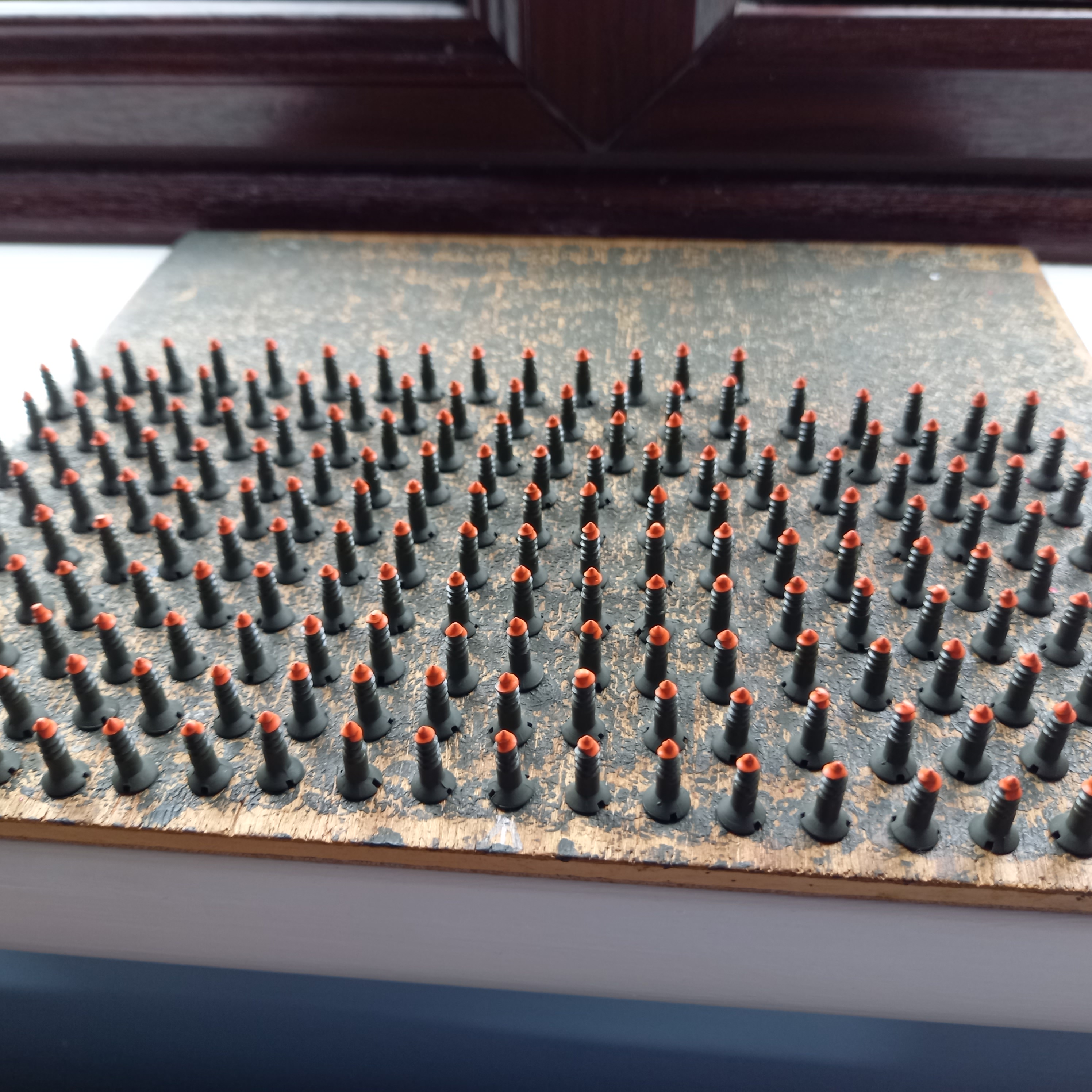
Also in hand is the upgrade to increase the size of gun crews in Heavy Artillery battalions. These are finished apart from the final coat of varnish. The orange heads denote the Heavy Artillery arm of service colour.


Sunday, 12 September 2021

WOODWORKING PROJECT. PART 3.

 As mentioned a while ago, I have been waiting for some time for my timber yard to obtain the quarter inch thick white melamine faced MDF sheets needed for the back panel and shelves of my new display unit. I am pleased to report these sheets have now been delivered cut to my specified sizes. 


My workshop is just too small to be able to easily handle 8 by 4 sheets so I get the timber yard to break the sheets down to manageable sizes which I can then cut to final dimensions. Also seen in the photo are the two 16 foot and one 6 foot long planks which will provide the actual frame of the display unit. In the past I have always used factory made sheets of 8 by 2 foot pine and cut the various parts from them. However as previously mentioned these panels are next to impossible to obtain at the present time so I opted to buy regular planks which I can cut/join together to make  the components. It is not a good idea to use very broad planks of solid timber to make anything as they are prone to warping and twisting. The factory made panels I usually use are made of strips of wood only two inches wide. I have found that when I make panels the best size of plank to use is about 4 to 5 inches.


The machine I use to make panels is the biscuit joiner. This cuts slots in the edge of timber planks into which are glued biscuits of beech as seen in the plastic box above.


Shown here is a slot full of glue into which the biscuit is inserted. The edge of the plank is then glued together with the exposed part of the biscuit and the next plank laid on top.


Once all the planks are attached together the whole thing is clamped up and left to dry overnight.


The reason for the central clamp being located on the other side is to stop the boards bowing out under the clamping pressure of the outer clamps.


Shown above are the top and bottom panels which I made a few days ago. You can actually see the three planks they are made from on the panel to the rear. The colour variation will disappear during sanding after which they will be cut to final size. The two panels I made today will each be cut in half to form two of the central uprights of the display unit. The other two will be made from the shelves of the redundant bookcase which I need to dismantle shortly. I see no point in wasting perfectly good timber if it can be easily reused.

Just as a reminder of what I am making , below is a photo of an existing display unit above the bookcase that will shortly be removed and re-purposed. The new unit will be located where the bookcase now resides. Each of my three existing display units is about 5.5 feet long, 2.5 feet high, 8 inches deep including decorative overhangs and has 80 shelves which give 40 square feet of shelf which accommodates a complete army of c.20,000.


The next posting will cover cutting panels to size, routing of door track and back panel groves and re-use of the redundant bookcase.

Tuesday, 7 September 2021

BOOK REVIEW: WAR ESTABLISHMENTS.

Part 1.  Expeditionary Force.  1914.


This is a new purchase of a facsimile reprint of the January 1914 original publication. The content is basically over 270 pages of tables showing the officers, men, horses, vehicles, guns and equipment scheduled for every type of unit within a potential expeditionary force. 

As such it is not really a book for reading but rather a perfect reference source for the structural composition of the British army of 1914 as sent to France. So if you want to know, for example, how many shovels and pickaxes an 18 pounder battery carried,  or how many bicycles were in an R.E. field company this is the book for you !!!!!  

A highly recommended book for those interested in this sort of information.

By the way, the answers are 30, 18  and 33 respectively !!!!!!  

Friday, 3 September 2021

UPDATE.

 Something of a continuing surprise to me is that my updates seem to attract more "views" than many of my other posts.  I also notice in reading other peoples blogs that non-modelling/wargaming posts also seem to attract more comments than I might have expected. I admit I too often find these non- modelling/wargaming posts more interesting as they bring the writers to life somehow. I guess we all like to read a bit about other peoples normal day to day lives.

With that in mind I thought I would comment on my rather frequent book reviews. I have always been an avid reader. I inherited my love of books from my mother and grandmother who were also keen readers. I am pleased to say that my two daughters also have that gene and read a lot. Indeed my youngest daughter, during her school days, often had three books on the go at any one time. One downstairs, one in her jacket pocket for daytime use and another on the bedside cabinet.

All of the books I review have been read by me within the previous week or ten days. I "consume" at least one book per week and often two. I estimate I buy at least 25 to 30 books each year. I almost always get Amazon vouchers for books at birthday, Christmas and even Fathers day. My library is close to 800 strong now. I very rarely part with a book once bought and tend to re-read each book every few years.  I have several very old first editions including my oldest book dated 1855.

My range of interests is somewhat limited as you might expect given my lifelong interest in military history. However the major topics represented in my library include; big game hunting and wildlife in general, Victorian engineering and building, history of the US, history of India,  history of Rome and of course military matters such as, the Napoleonic wars, US Civil War, Indian Mutiny and all other wars in the 19th century, First and Second World Wars and Vietnam.  One of my favorite topics is logistics especially during the pre-mechanised era. I have a lot of books on horse drawn logistics and always get very excited when something new comes along. 

I also have quite a few woodworking books as that has been my other hobby since the age of about 12.      I have made much of the furniture in the house as well as all the bookcases and modelling units. Other members of the family also have examples of my efforts.

Sources for books include  Helion and Naval and Military both of which offer many interesting titles. I also check out second hand bookshops on our travels although I often find they can be very overpriced. I admit on several occasions I have got my wife to photograph a book of interest which I have subsequently bought from Amazon a lot cheaper. I find antique shops and centres can have interesting books available and strangely at good prices. I guess they are seen as "extras" to the main items for sale. National Trust secondhand bookshops are another useful source. I have also found The Works stock good books at very reasonable prices although it can be hit and miss as to what is available at any one time. I regularly trawl Amazon especially for new re-published "facsimile" copies of old books. Finally of course book fairs can be good sources especially the local village versions if one can be found.

Space for books is an endless issue. My wife has a considerable number of cookery books which she constantly adds too so we are always short of shelf space. Even with the new free standing double sided bookcase I recently built there are still piles of books scattered around. Another bookcase somewhere will be needed in the near future for sure.

I hope this has been of interest to readers. If anyone has any good ideas for creating extra shelf space for books please let me know.


Monday, 30 August 2021

BOOK REVIEW: THE EASTERN FRONT 1914-1917


 This is a book from my library that I have had a long time and actually could not recall ever reading although I am sure I did at the time of purchase.

Having now read this book again I am pleased I did  as it really is very good. The Eastern Front is hardly mentioned in most WW1 histories yet the campaign was so very different to that on the Western Front. Indeed it was more like the the sort of open warfare that most generals expected in 1914. The book covers the various battles with a  fairly broad brush as I would expect given the huge scale of the fighting. However it also covers the economics of war mainly from the Russian perspective. It tries to answer the question of whether Russia had the industrial strength to have won if the revolution had not curtailed the political will to continue the fight. A great deal of research has gone into this question and it makes good and interesting reading.

There are many fascinating aspects to the war in the east. These include massive troop movements, lack of a continuous front line, fortifications, where they existed, being only a virtual scratch in the ground and the huge numbers of prisoners taken due to outflanking by both sides on a regular basis. 

An excellent book with only one  downside in that it leaves me with a thirst for more detail on the various battles and campaigns. There is very little published about the Eastern Front and I will have to undertake a search to find more books on this fascinating theater of war.

Thursday, 26 August 2021

BOOK REVIEW: UNTIL THE EYES SHUT.


 This is a new book I found when trawling Amazon. The author is the grandson of an Austrian, Hans, who was drafted into the Wehrmacht at the age of 18 in late 1943. After training he joined a mountain division  ( 3rd Gebirgsjager Division) and spent the rest of the war as a machine gunner on the Russian front.

The author spent many hours talking with his grandfather about his experiences, which was clearly a difficult thing for both of them. The story of that year and a half in Russia and eastern Europe, constantly retreating under overwhelming Russian pressure, is harsh and brutal. Quite how Hans survived is a miracle given the merciless fighting he endured. However, also remembered is the comradeship with the others in the troop and the unexpected occasional gestures of humanity among the awful destruction and death. This book really tells the true story of the ruthless struggle on the Eastern Front.

In May 1945 as the German forces collapsed, Hans attempted to make his way home only to be captured by the Russians and imprisoned. He spent over two years working in a factory building T34 tanks before being released at the end of 1947 and then only because he was Austrian. German captives endured far longer in prison with most not being released until well into the 1950's. On his return home he took over the family farm and remained there for the rest of his life.

I highly recommend this book not only for its accurate and fascinating portrayal of life as a German soldier on the Eastern Front but also for the vivid descriptions of the simple human impact of that vicious campaign.

Sunday, 22 August 2021

UPDATE.

 August in the UK this year has clearly been the first month of Autumn with some weeks of rain, cloud and low temperatures. The good side of this is that I have managed to get a bit more modelling time. Since my last update I have completed  upgrades 27 through 32 which have added 714 more soldiers to the ranks. 

On the woodworking project I am still waiting for the quarter inch thick white melamine faced MDF sheets that I use for the back of the display unit and the actual shelves. In common with many building and timber products these sheets are in short supply at the moment and have  more or less doubled in price too. I am told delivery should be next week so will keep my fingers crossed. As soon as work starts on construction of the new unit I will post accordingly.

Regular readers will have noticed a new Imagi-Nations post this past week. As I mentioned previously the timeline is now within a couple of years of the present day so I decided to spread out the remaining chapters and publish just once a month. I hope you all still find them interesting.

I have been surprised that no one commented on the video I included in my last update on the battle of Isandlwana. Maybe everyone has already seen the film and I was late to the party. However if you have not watched it, I urge you to do so, it really is very good.


Wednesday, 18 August 2021

IMAGI-NATIONS. PART 43.

 THE BATTLES WITH RUSSIA.


While fighting raged in the west against Germany in late 1888 and early 1889 the two sides in Ukraine remained facing each other with neither side having the strength to force a decision. The Russians had committed virtually their whole army to the struggle but still could not risk an assault against the over whelming UNION artillery. The UNION had only four armies in Ukraine and until reinforcements became available after the defeat of Germany they too did not wish to risk an attack. Both sides contented themselves with digging in and exchanging regular artillery barrages although the Russians had soon learned that UNION counter battery fire was highly effective meaning Russian batteries had to move positions regularly.

When the Germans had initially invaded  in the west, the UNION was very concerned that the Russians would launch an attack to support their allies knowing that UNION forces would be weakened in Ukraine as a result of fighting on two fronts. They had therefore adopted a strategy of launching cavalry raids from the south of Ukraine against the 1000 mile long Russian supply lines in the north. The four cavalry brigades available were formed into an ad hoc  cavalry army under the command of General Forrest and he established a base just north of Kiev. The government of Ukraine supported the UNION cavalry by supplying food and fodder to the base meaning that UNION transport companies only had to deliver ammunition and other military supplies. In addition the UNION finally decided to construct a railway line from Richmond to Kiev, something the Ukrainians had been requesting for years but which the UNION had refused because of the conditions agreed with Russia in the peace treaty after the War of Independence which precluded either side from constructing any railways in Ukraine.

The cavalry under Forrest launched their first raid  against Russian supply lines and their railway on 7 December 1888. It was a great success and resulted in destruction of several Russian trains and substantial damage to the tracks in many  places as well as destruction of large amounts of supplies. Over the next few months the raids continued as the Russians desperately sought to defend their supply lines. A large number of Russian reserves as well as troops from the front line formations were deployed to protect the railway reaching over 50,000 men by January 1889. Blockhouses were constructed at intervals along the railway but UNION cavalry seemed able to slip between the Russian positions almost at will. By late February severe shortages of ammunition and other supplies were being felt throughout the Russian front line formations.

The Russians realised that their situation was becoming desperate and with news of the collapse of the German army it was only a matter of time before huge UNION reinforcements would arrive to launch an over whelming attack on the weakened Russian army. Clearly the Russian gamble had now failed and it was time for the Russians to retreat out of Ukraine and seek to defend the border where at least they would be free of the very damaging UNION cavalry attacks. Preparations immediately began to start a phased withdrawal using strong rearguards to prevent the UNION turning the retreat into a rout.

At the end of March 1889 the Russians began their retreat. The UNION had no idea at first the Russians were falling back as strong Russian rearguards gave the impression the Russian forces were still in position. A UNION cavalry attack on the Russian railway  on 2nd April gave the first serious indication of the Russian retreat. As UNION cavalry ambushed a Russian train moving east the cavalry were surprised to receive very fierce return fire from the train. As it came to a halt, over 2,000 Russian troops deployed from the train and assaulted the dismounted cavalry. Almost immediately another train arrived and also disgorged a large number of troops who joined the attack on the UNION cavalry. Vastly outnumbered and suffering heavy casualties, the UNION cavalry had to make a quick retreat.

The same thing happened two days later as the UNION command realised that railway traffic on the Russian tracks was now predominately east bound. A Russian retreat was clearly in progress. UNION forces were instructed to follow up the Russian withdrawal but, to avoid unnecessary casualties , to maintain a distance unless Russian troops showed an inclination to hold their ground for more than a day or two. The UNION cavalry were ordered to cease attacks on the Russian railways, except for horse artillery fire on passing trains, and just monitor the Russian withdrawal.

By early June 1889 the Russians had withdrawn to the Volga river and could be seen by UNION cavalry patrols to be entrenching on the eastern bank on Russian soil. The UNION army advance guard arrived on the west bank on 15th June and deployed opposite the main bridge. UNION heavy artillery was ordered to destroy the bridge with a bombardment  at dawn on 17th but during the evening of 16th June the bridge exploded and collapsed from the effects of Russian demolition charges. During the following days a number of Russian stragglers were captured along the line of the railway as they made their way east. All were escorted to the Volga and, after a short delay, a boat came over from the Russian side and was allowed to remove the last Russian troops from Ukraine. Further south, the other two light bridges over the Volga were destroyed by Russian demolition charges as soon as UNION forces came in sight.

As the UNION celebrated its victory over the combined forces of Germany and Russia, time was also taken to remember the many thousands of UNION soldiers who had been lost in the heavy fighting on both fronts. The war had cost more UNION lives than any other war and the UNION was very aware that defeat had come very close. The exhausted UNION armies remained in their front line positions while preparations were made for them to return to their bases and arrangements were made for small garrisons to monitor both the Volga and the Rhine. Without warning on 28th June a message was flashed to all UNION commands that cavalry from 10th Reserve army patrolling in southern China had located a very large Chinese army moving south towards the border.


Friday, 13 August 2021

BOOK REVIEW: FROM THE GRACCHI TO NERO.

A History Of Rome From 133 BC To AD 68.


Following my review a while ago of my old school book about Republican Rome, Ion of the Archduke Piccolo blog told me about this book, by the same author, which is the follow up volume. Of course I just had to buy a copy and secured this used "as new" paperback. Thanks Ion for bringing this book to my attention.

I have now read the book and it is excellent. I really like the writing style and it complements the previous volume perfectly. The transformation of Republican Rome to Imperial Rome is clearly described. It is strange that, at the time, the Emperor was not so, just First Citizen. Romans had a great historical aversion to the idea of a Monarchy so the move towards an Emperor was carefully disguised using the old Republican terms of Consul etc. It is also clear that most Romans had no desire to repeat the misery of the Civil Wars  so were happy to accept the peace and prosperity bought by an all powerful "First Citizen" who curbed the ability of individual Senators to enrich and empower themselves at the expense of the nation.

I have looked for the logical next volume covering the Emperors after Nero but can find nothing written by Scullard which is a great shame. However as I am more interested in the early history of Rome I will not worry too much about finding an alternative author.

On a general note, in reading about Rome, it never ceases to amaze me just how sophisticated Roman society actually was some 2000 years ago. I often wonder, if Roman civilization had not given way to the Dark Ages but had continued to advance without interruption, just where would we be today. It is at least arguable that a good 500 years of development were lost to Mankind. On that basis the civilization of today could have existed in 1521. Now that is a thought !!!!


Sunday, 8 August 2021

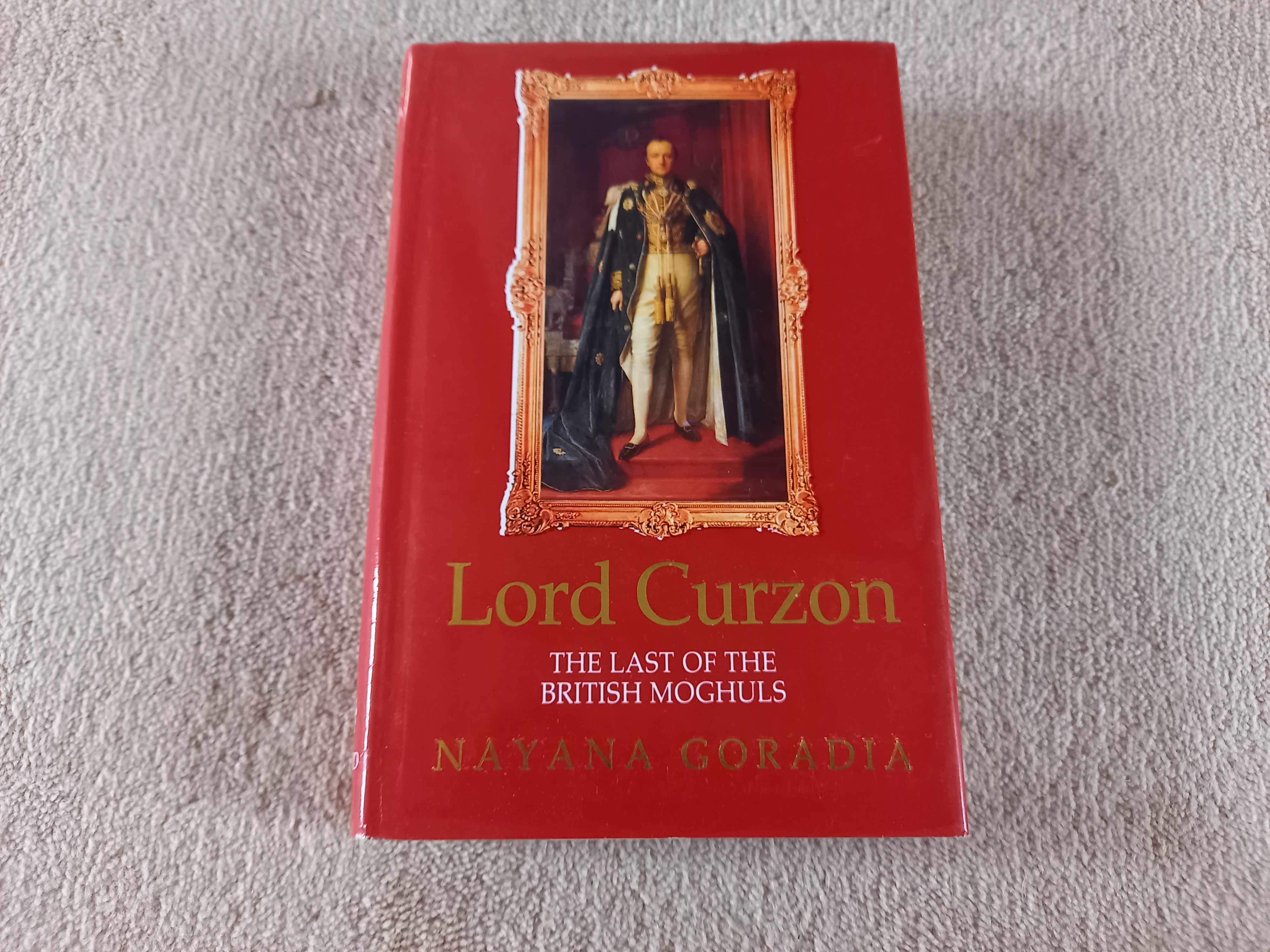
BOOK REVIEW: LORD CURZON

The Last Of The British Moghuls.


This is the second book I recently purchased at our local National Trust second hand bookshop.

The author is clearly a strong supporter of Indian nationalism. As a result the first half of the book covers Curzon's early life and the other half is devoted to his time as Viceroy. His political career before and after his 7 years as Viceroy is virtually ignored. The main aim of the book seems to be to suggest that the effects of his upbringing and schooling especially his time in the English public school system created some sort of deviant human being which manifested itself in his time as Viceroy.

The book also devotes a lot of space to describing the advent of some very marginal Indian resistance movements while almost ignoring Curzon's well known struggle with Kitchener for control of the Indian army. In fact one could be forgiven for assuming after reading this book that Indian independence took place because of Curzon's performance as Viceroy and indeed only a couple of years later rather than over 40 years later.

I am sure that this book's version of history will appeal to some but I am not one of them. I have no doubt that Curzon,  like all people,  had flaws, but some of the suggestions alluded to in this book are really ridiculous. This is not a real autobiography of a significant politician of the late 19th and early 20th century but rather a politically motivated hatchet job designed to strengthen the view that the British Raj in India was operated by sociopaths and was therefore very bad with no redeeming features at all. 

Like many people I take the view that the Raj had both good and bad elements. However at the time it seemed like a good idea and I just do not believe that it is reasonable to apply today's perspectives to those of the past. It is certainly not fair to paint such a distinguished statesman as some sort of monster just to support a radical political theory.

As I do not believe in destroying any book under any circumstances this book will be donated to a charity shop  as quickly as possible.

Thursday, 5 August 2021

WOODWORKING PROJECT. PART 2.

Having allowed the glue on the new bookcase to dry over the course of a couple of days the next task was to cut off the surplus dowel rods used to fill the "pocket screw holes" and sand the dowels flat. In the photo below you can just see the dowel used to fill the screw hole attaching the bun feet sanded down.


The next picture shows the top with rounded over corners and edges.


The next step in the finishing process was application of two coats of Antique Pine stain. Although all our furniture downstairs is oak, upstairs the colour of choice is antiqued pine. The photo below shows the unit after those two coats. Also shown below , because I forgot to photograph it before staining, is the dowel rod in a "pocket screw hole" cut down and sanded flat. As can be seen the effect is of a lozenge shape. This looks quite attractive and eventually after finishing is complete it almost disappears.


This photo shows the whole unit fully stained.


After staining the unit received two coats of lacquer with a very light sanding between coats. The next photo shows the unit in its new permanent home after the lacquer dried overnight.


The final touch is a light waxing. Although the unit looks wider at the top than the bottom it is in fact quite square. The strange shape is caused by the funny angle I used to take this photo.


Just for interest, the dimensions of the unit, including overhangs and bun feet are: length 39" 990mm, width 18.5" 475mm and height 36.75" 935mm. The total shelf space is 216" (18 feet ) 5490mm (5.5m ).

I am currently awaiting delivery of the timber for the new modelling unit itself and will post on the construction of that unit just as soon as work gets underway.

Saturday, 31 July 2021

UPDATE.

 I am pleased to report that I have managed a reasonable amount of modelling time over the past few weeks. This is surprising given the time I have spent on building my new bookcase,  (the second part of the construction report will be published in a few days, )  and other chores and social activities. I really have no idea why some weeks are more productive than others.

I have managed to complete update numbers 25 and 26 which have brought my armies to a strength of 56,622. In addition I have added yet another upgrade to the list. Upgrade number 49 covers the increasing of heavy artillery gun crews from 6 to 8.  I decided that heavy guns needed more crew than field artillery and my references agreed with that view.

I must also report that the number of visitors to my blog has now gone over 10,000 and I have a new follower bringing the total to 7.  I know that's not much compared with many of the wargaming/modelling blogs out there but given that mine is about using woodscrews to make model soldiers I am very pleased indeed and grateful to all those who read my stuff.

Finally I must bring readers attention to an amazing YouTube video I recently watched. Some of you may well have seen it already but I strongly recommend it. The video is about the Battle Of Isandlwana but is filmed using plastic model soldiers.  It took the best part of two years to make apparently and I think is really brilliant.


I especially commend this film to Mark at Man of Tin blog, I think it is right up your street Mark. Hope you all enjoy as, not being a child of the digital age, it took me a long time to create this link !!!!!


Tuesday, 27 July 2021

WOODWORKING PROJECT: PART 1.

I mentioned sometime ago that having almost completed my three armies, I now wanted to build a new display unit to take a fourth army , the construction of which would keep my hobby going for another 5 to 6 years at the least. The problem was , where to locate the new display unit having already exhausted the available wall space in both our spare rooms. Strangely my wife was not keen on having the new unit in either our bedroom, the dining room or even the lounge. 

After much consideration I concluded that the only practical place would be underneath my third display unit which currently sits on a bookcase. My idea was the remove the bookcase and use the space thus available. However, having so many books we could not afford to lose 15 feet of bookshelf. I therefore decided to build a free standing double sided bookcase which could sit in the middle of the room alongside the stereo tower.

The current arrangement is shown below.


The project involves three stages. First I need to build the new bookcase. Second I will build the new display unit and thirdly I will  carefully remove the old bookcase while supporting the existing display unit, fit the new unit underneath and securely attach both together and to the wall.

To build the new bookcase I am using manufactured pine boards that come in 8 by 2 foot panels. These are made up of small strips of timber glued together and planned smooth. Although expensive they save a lot of time in making and finishing my own panels. When building with hardwood I always make my own panels using "biscuit" joints. My first job was to cut all the component parts; a top and bottom, two side panels, two shelves complete with supporting rails and  top and bottom rails. I already had a set of bun feet in stock left over from a previous project. The photo below shows the various parts cut to size including the bun feet  just visible in the top left.


The next step was to attach the rails to the two central shelves. These rails are fixed to the top of the shelves. They serve three purposes. As the bookcase is double sided, they will stop books being pushed back onto the other shelf. They also provide some addition strength to the shelves and lastly, as the bookcase has no back as such, it needs some sideways bracing. The four rails altogether provide this bracing.


The photo below shows the top and bottom panels ready to have the corners and edges rounded over which I do with the router. After that all the pieces were sanded then wiped with a wet sponge and left to dry. This raises the grain so that after another sanding the wood is smooth enough not to require any addition sanding other than a light wipe over with "wet and dry" during final finishing.


The whole structure is assembled using "pocket screw joints" and glue. I find this method gives the strongest joints for units made of panels. I have a jig to make the pockets and use special screws to make the connections. The photo below shows the unit fully assembled with the bun feet also attached.


In order to hide the "pocket screw" holes, I glue lengths of pine doweling into the holes  as can be clearly seen below. I also used a piece of dowel to fill the holes for the screws that hold the feet to the base.


The unit will now be left for a couple of days to allow the glue to fully set up. My next report will show the finishing process.


Friday, 23 July 2021

BOOK REVIEW: THE 40mm BOFORS GUN.


My turn to find a book in a National Trust second hand book shop. In fact I found two, the other one will be reviewed later.  This book dates from 1986 and is a very readable account of the famous Bofors gun.

Originally developed in 1936 and still in service today, this gun has been used by just about every nation in the world at some time or other. It was manufactured under license in the war by all the major powers except Germany. However that nation used large numbers of captured guns and ammunition throughout the war with later supplies of ammunition being made in Hungary.

The simple reason for the guns success was and is that a single hit on an aircraft is a virtually certain kill due to the power of the 40mm shell.  As you would expect the book details the development of the gun up to the present day (1985 that is ) and its applications both naval and military. Overall a good history of an important and widely used weapons system.


Sunday, 18 July 2021

BOOK REVIEW: THE GUNS THAT WON THE WEST.


My daughter Laura found this book at a National Trust second hand bookshop up north somewhere. Knowing of my interest in Old West guns as evidenced by my purchases earlier this year of air gun replicas of both the  Winchester 73 rifle and Colt 45 pistol, she bought me the book. Thank you Laura.

The subtitle of the book is "Firearms on the American Frontier, 1848 - 1898" and it details all the guns available in the West during that period. It gives great details on the origins of the big manufacturers like Colt, Winchester and Smith And Wesson as well as intricate details of all the weapons. There is even a good general history of the Old West with items on some of the well known characters of the time. Appendix to the main narrative discuss the development of ammunition and the myths and realities of actual gun performance.

Overall this is a serious text book on the subject and will appeal to anyone interested in guns of the American west including the Civil War period. It also serves as a quite good outline history of the half century when the Wild West actually existed. A good book, thank you Laura.


Tuesday, 13 July 2021

UPDATE.

 I was repeatedly told that when I retired early, at only 50, I would struggle to keep myself occupied. Well that has proven to be very wide of the truth. In fact I have always been very busy. I have no idea how I ever found time to go to work especially in the summer. The past couple of weeks has once again proven this to be the case. 

I have now finished the installation etc of the new window cill. It looks great and the joints have disappeared under the paint. However I have now been informed that there is a lot of work to be done in the garden especially now that the wet weather seems to be passing, ( we hope anyway !!!) In addition I have a number of other jobs to do including repainting the other window cills, all of which must be done before I can get on with building the new bookcase. 

When I start on a construction project like building a new piece of furniture etc I like to have a clear run without having to think about other jobs still outstanding. This means the construction of the new bookcase will not start till this coming weekend at best. In addition our social life seems to be picking up again as the country reopens. I am not sure this is a good thing with the virus still rampant but as we are double jabbed and will still wear masks in all crowded settings and be careful generally I guess we should go with the flow.

This means a bit of shopping today with a nice lunch out so another day lost to work , what a shame !!!! I find that the only thing I can settle to when I have an odd couple of hours or less is a bit of modelling and in fact it has only been a few odd hours here and there that I have been able to devote to modelling these past couple of weeks. With this in mind I have completed upgrades 22, 23, and 24 which have added another 360 soldiers to the colours. I am now half way through the planned upgrades.

Speaking of colours reminds me to report on my visit to a new model shop that has opened in our county town market hall. It is now the only outlet within 35 miles that sells Humbrol paints. I bought a number of tins and had a chat with the owner. I am pleased he has been able to open the shop only a month or so ago when model shops seem to be disappearing everywhere. He is now the only such shop I know of between Wolverhampton and Chester. Although a very small shop he is well stocked and says he can get anything within a couple of days. I will put that to the test !!!

Well guess I need to get ready to go to lunch, its a hard life !!!!!

Friday, 9 July 2021

BOOK REVIEW: A GREAT FEAT OF IMPROVISATION.

Logistics And The British Expeditionary Force In France 1939-1940.


The publication by Helion of this book in the past month was brought to my attention by Mark at the Man of Tin blog as he knows of my great interest in logistics. I immediately ordered a copy and am now on their mailing list, thanks Mark.

The book is by Clem Maginniss who, as a ex-British Army logistician,  is fast becoming the premiere military logistics author of today. The book tells the story of the BEF from the declaration of war until the evacuation at Dunkirk from the logistics perspective.

There is no doubt that logistics is given short shrift in most military histories yet it is so true that "amateurs study tactics and professionals study logistics". This book seeks to redress the balance and  for this campaign certainly does exactly that. It tells the full story of the build up of the BEF during the phoney war, reminds us that at the time the BEF was the only fully motorised army in the world and outlines the extraordinary work needed to support what had became a force of over 400,000 by May 1940.

The research that has gone into this book is fantastic, there is so much detail that, just like the authors previous work, "An Unappreciated Field Of Endeavour", which covers British Army logistics in the First World War, this book will surely become the standard text on the subject.  However, great as this book is, it suffers from the same flaw as the previous work. That is the sheer amount of footnotes. These are so huge they often consume half of each page in the book and occasionally the whole page !!!!! While it is great to have so much information, it makes reading the book hard work. One is constantly loosing the thread because before turning the page you tend to read the lengthy notes and forget the main story !!!!!. 

There must be a better way of delivering these valuable footnotes without making the book so hard to read. Having said all that , this is a great book and highly recommended to anyone who wants to be a "professional".


Sunday, 4 July 2021

BOOK REVIEW: MORTAR GUNNER ON THE EASTERN FRONT.


The original of this book was published in 2008 with the English version coming in 2019. This is volume 1,  volume 2 is also available. I purchased this book in The Works at £7 a few weeks ago. On looking at Amazon for volume 2, I found both volumes available at over £20 each. Today on Amazon, volume 1 is now only £7 but volume 2 is still £18 !!!!!!!

This is the war memoir of a German mortar gunner who served with Grossdeutschland from his enlistment at 18 in 1941 through to the end of the war. His survival is almost a miracle given the bitter fighting and numerous ordeals he went through during those years. After the war he became a veterinarian and lived till 2017.

The book is well illustrated with many of the authors own photographs not previously published and offers a very good insight to life as a German soldier both in combat but also out of the line. In fact there is just a bit more about that side of things than the fighting which probably speaks to his strongest memories. There is much to interest everyone from details of the Opel Blitz truck, the weapons, rations etc as well as a soldiers view of the battles he  endured. For example it is hard to grasp from this book that Operation Citadel was a defeat for the Germans. Of course this is due to the very limited view the author, or indeed any ordinary soldier, would have of a large battle.

I will certainly buy volume 2 although I may just wait to see if The Works get it in later in the year before using Amazon !!!!  Overall a very good book and well recommended.